Browser-Based Acoustic Modeling Powers Real-Time Species Identification in Citizen Science Networks
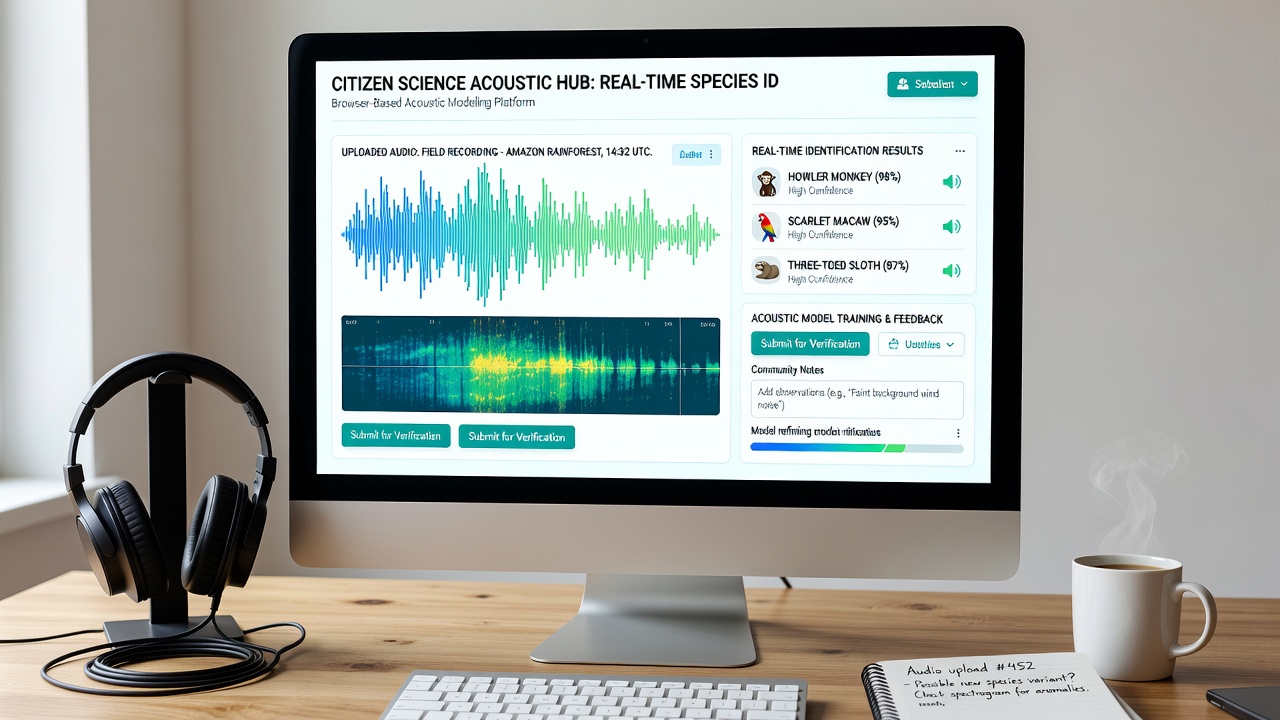
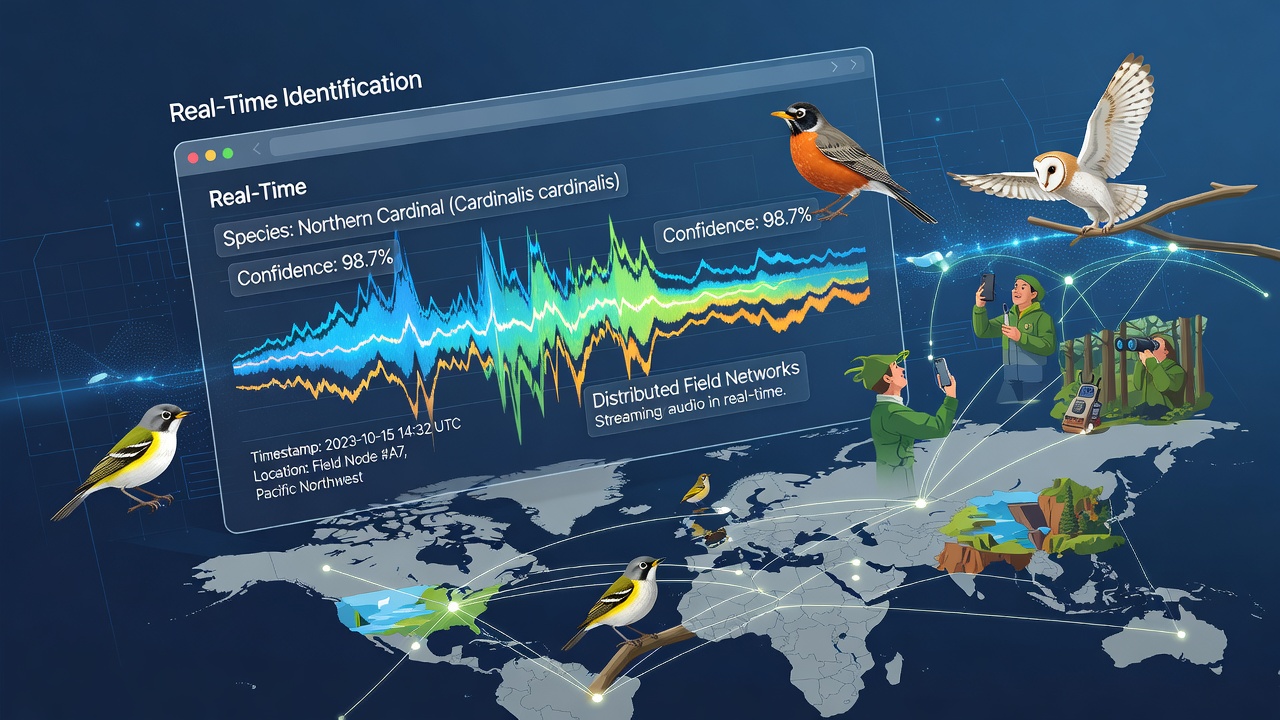 Acoustic modeling in browsers processes audio uploads from citizen scientists who collect recordings across remote locations, and these systems apply machine learning models directly within web environments to identify species such as birds, amphibians, and insects without requiring specialized software installations. Data flows from handheld devices and fixed field sensors into browser sessions where convolutional neural networks analyze spectrograms in real time, returning species matches along with confidence scores that users can verify against local observations.
Technical Foundations of Browser Acoustic Processing
WebAssembly runtimes execute optimized acoustic models that convert raw audio waveforms into frequency representations, then match patterns against trained datasets covering thousands of vocalizations, while JavaScript bridges handle microphone access and file uploads from distributed networks. Researchers at institutions like the Cornell Lab of Ornithology have documented how these pipelines reduce latency by keeping computation on the client side, and figures from 2025 deployments show average identification times dropping below three seconds for common species when users connect through standard browsers on laptops or tablets.
Distributed field networks integrate battery-powered recorders that stream compressed audio clips to browser dashboards, and synchronization protocols ensure uploads from multiple sites align temporally for comparative analysis across habitats. Observers note that this setup supports collaborative verification where one participant's identification can be cross-checked against data from nearby sensors, creating layered datasets that strengthen model accuracy over successive seasons.
Citizen Science Applications and Network Scaling
Participants in programs spanning North American wetlands and European grasslands upload recordings through web portals that immediately flag potential matches for frogs or migratory birds, and the same interfaces allow volunteers to tag environmental variables such as temperature or time of day that refine future predictions. Data shows participation rates climbed steadily through early 2026 as browser tools eliminated the need for desktop applications, with one Australian biodiversity project reporting over 12,000 verified uploads in the first half of the year alone.
Real-time feedback loops encourage sustained engagement because contributors receive instant species labels that they can confirm or correct on the spot, while aggregated results feed back into model retraining cycles that run periodically on central servers. Those who've studied these systems know the architecture preserves privacy by limiting raw audio retention after local processing completes, and network operators can scale participation simply by sharing browser links rather than managing device fleets.
Integration with Broader Environmental Monitoring
Browser acoustic tools connect with mapping services that plot species detections on interactive grids, and users can overlay detections with satellite imagery or weather records to examine correlations between habitat conditions and vocal activity. Government agencies including the U.S. National Science Foundation have funded pilot networks that combine citizen uploads with automated sensor arrays, producing continuous biodiversity metrics for protected areas where traditional surveys occur only seasonally.
Edge cases such as overlapping calls or background noise receive handling through ensemble models that weigh multiple acoustic features before outputting results, and field tests conducted in July 2026 demonstrated improved precision when models incorporated region-specific training data from prior citizen contributions. What's interesting is how these refinements propagate quickly across the network once updated weights load into participating browsers, allowing widespread model improvements without individual device updates.
Future Directions in Distributed Acoustic Analysis
Continued refinement of browser APIs supports higher-resolution audio capture and more complex model architectures that distinguish subtle dialect variations within species, while partnerships with research bodies in Canada and the European Environment Agency explore standardized data formats that facilitate cross-border comparisons. Observers note that challenges around variable network connectivity in remote field sites are being addressed through progressive caching strategies that let partial results display even when uploads pause temporarily.
Case studies from ongoing projects reveal that combining browser processing with lightweight metadata tagging creates searchable archives that ecologists can query for long-term trend detection, and these resources now support educational modules where students analyze real field recordings directly in classroom browsers. The approach continues to expand because it lowers barriers for both data collection and analysis, allowing more participants to contribute meaningful observations across wider geographic ranges.
Conclusion
Browser-based acoustic modeling has established itself as a practical layer within citizen science infrastructures that connect distributed field recordings to immediate species identification capabilities. Continued adoption depends on steady improvements in model efficiency and network reliability, yet the existing implementations already demonstrate measurable gains in data volume and verification speed across multiple continents.