Browser-Based Synthetic Media Detectors: Tracing Deepfake Origins Through Local Pixel Pattern Analysis in Real Time
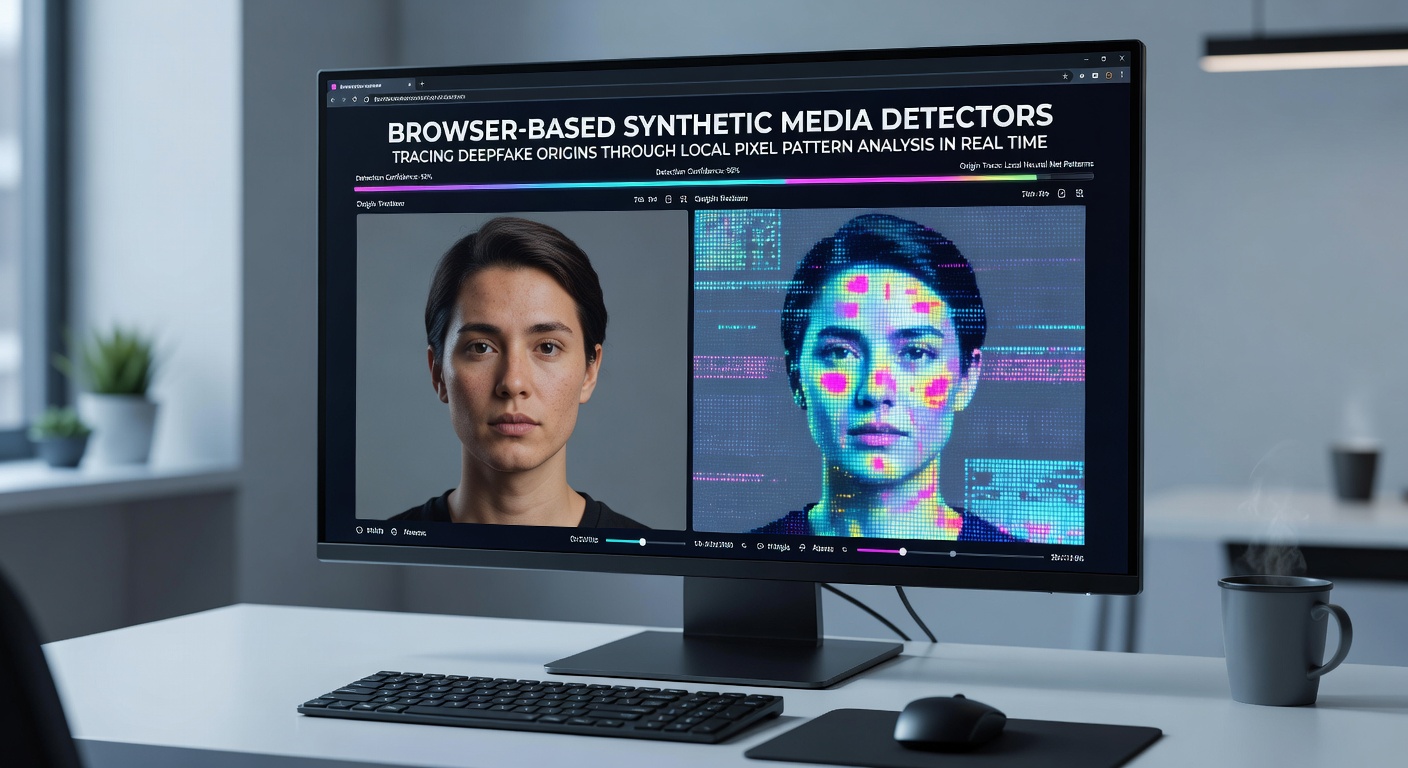
Browser-based synthetic media detectors examine video and image streams by breaking down frames into small pixel clusters, then checking for statistical irregularities that often appear when generative models create content. These tools operate directly in web environments, allowing users to upload or stream media without sending files to remote servers, which keeps processing local and immediate. Data from multiple research groups shows that such detectors identify anomalies like mismatched noise distributions or edge artifacts within individual pixel neighborhoods, patterns that tend to emerge during synthesis but remain invisible to standard playback software.
Mechanics of Local Pixel Pattern Analysis
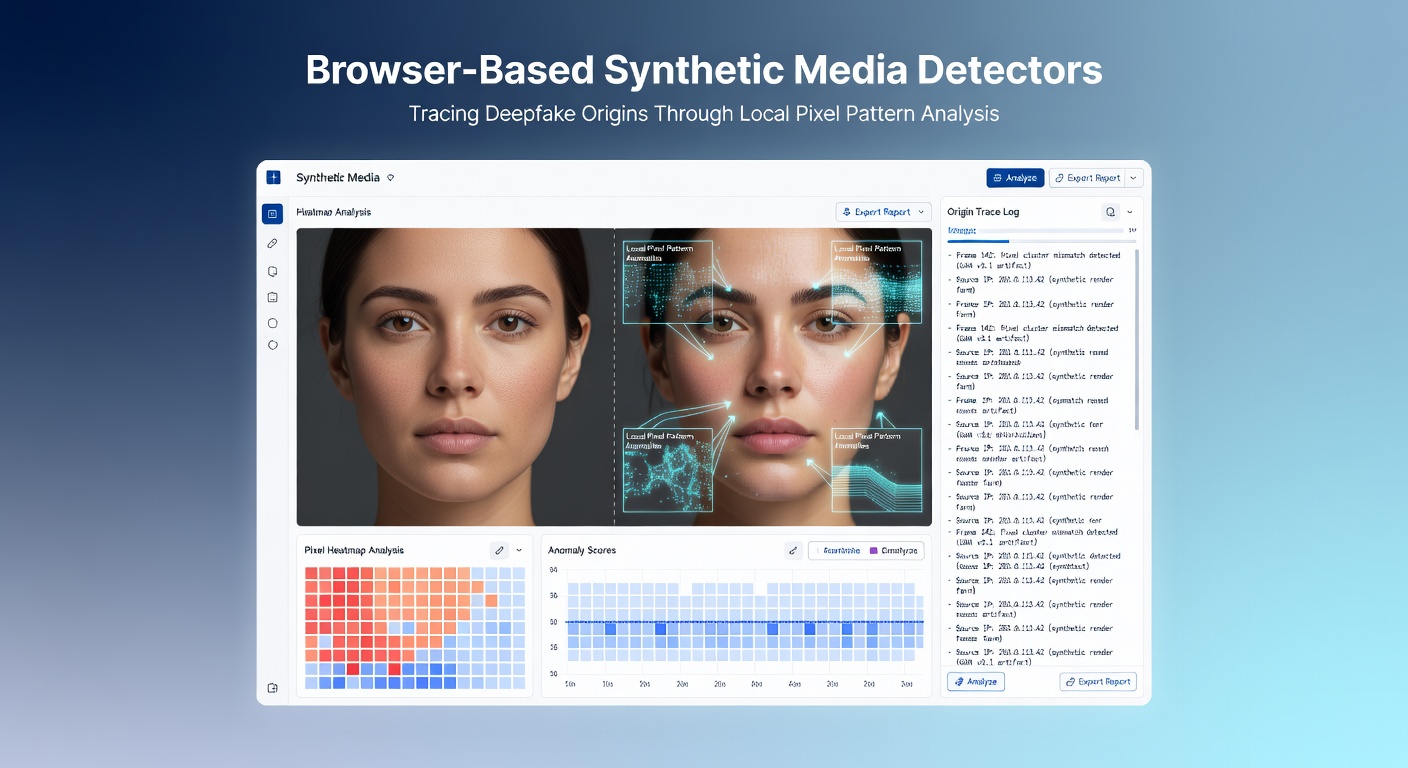
Local pixel pattern analysis starts by dividing each frame into overlapping blocks of 8 by 8 or 16 by 16 pixels, after which algorithms calculate metrics such as local binary patterns, gradient magnitudes, and frequency-domain coefficients inside those blocks. Researchers at several institutions have documented that deepfake generators frequently leave behind subtle inconsistencies in these metrics because training data and model architectures struggle to replicate natural camera noise uniformly across an entire image. When the same analysis runs across consecutive frames, temporal inconsistencies become visible too, revealing edits that span multiple moments in time. This approach differs from global methods that average statistics over whole images, since localized checks catch smaller manipulations before they blend into larger areas.
Real-Time Operation Inside Browsers
Implementation in browsers relies on JavaScript libraries that access canvas elements and WebAssembly modules to run the necessary computations without external dependencies. As of May 2026 several open-source projects have released updated versions that process 1080p video at 30 frames per second on mid-range laptops, using optimized matrix operations that fit within typical browser memory limits. The detectors flag suspicious regions by coloring overlays on the video player, giving viewers immediate visual feedback rather than waiting for a full report. Integration with existing web video players occurs through standard extension APIs, so platforms can embed detection without rewriting core playback code.
Tracing Origins Through Pattern Signatures
Each generative model tends to imprint characteristic signatures on pixel statistics because of differences in upsampling layers, loss functions, and training datasets. Observers note that pattern-matching databases now store reference signatures from more than forty publicly known models, allowing detectors to suggest possible source architectures when matches exceed predefined thresholds. One study released by an Australian university group in early 2026 matched pixel anomalies from social media videos to specific open-source generators, providing investigators with leads that later aligned with server logs from hosting providers. Such tracing remains probabilistic rather than definitive, yet it narrows the field of candidate tools considerably when combined with metadata checks.
Deployment Across Platforms and Regions
Newsrooms in North America and Europe began incorporating browser detectors into verification workflows during 2025, with adoption accelerating after regulatory guidance from the European Union's AI Office clarified expectations for content authenticity tools. In parallel, Canadian research networks published comparative benchmarks showing that local pixel methods maintained higher precision on compressed social media clips than cloud-based alternatives when bandwidth varied. Journalists describe running quick checks on press conference footage before publication, catching edits that would otherwise require specialist software. Government agencies in several countries have tested similar detectors for internal document verification, though public details about those programs stay limited.
Limitations and Ongoing Refinements
Current detectors still miss certain adversarial examples where generators receive additional training to mimic expected noise profiles, and performance drops when input resolution falls below 720p or when heavy compression removes high-frequency details. Teams continue to expand reference signature libraries and to combine pixel analysis with other signals such as audio spectrogram irregularities, yet no single method claims complete coverage. Figures released by an industry consortium in March 2026 indicated that false positive rates on authentic user-generated content hovered around 4 percent across tested datasets, prompting developers to expose adjustable sensitivity sliders inside the browser interface.
Integration With Existing Standards
Standards bodies have started referencing local pixel analysis techniques in draft specifications for content credentials, which aim to embed verifiable provenance data alongside media files. When detectors run alongside these credentials they can cross-check whether reported generation methods match observed pixel statistics, adding a second layer of validation. Projects coordinated through academic and industry partnerships have produced test suites that simulate common manipulation pipelines, helping developers measure how well new detector versions hold up against evolving generator techniques.
Conclusion
Browser-based synthetic media detectors that rely on local pixel pattern analysis deliver real-time identification of anomalies directly on user devices, supporting faster verification workflows across journalism, research, and regulatory contexts. Continued updates to signature databases and algorithm efficiency keep pace with new generation methods, while geographic diversity in testing ensures broader applicability. As these tools mature they form one component within larger ecosystems that also include metadata standards and human review processes.