Browser Fingerprinting Evolutions: How Canvas and Audio APIs Enable Precise Tracking Without Third-Party Cookies
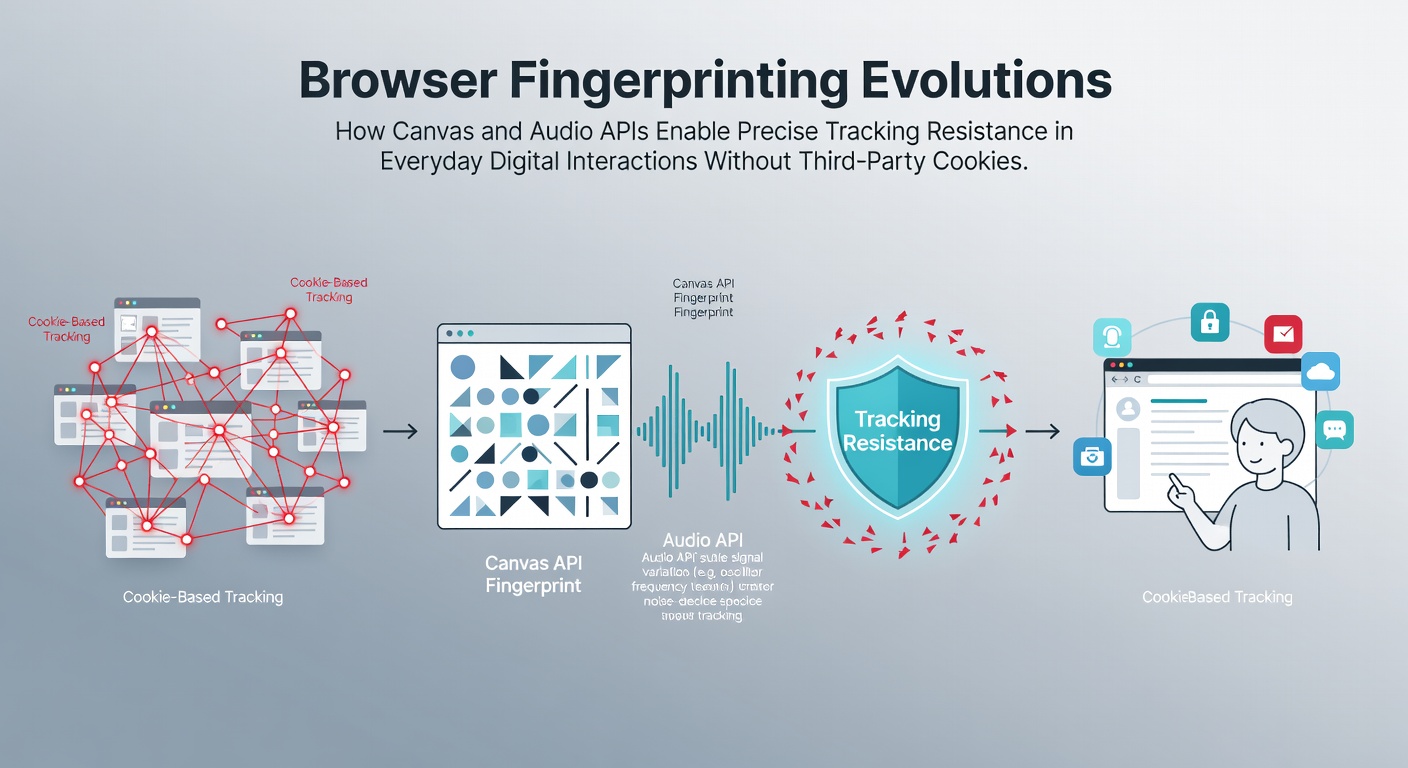
Browser fingerprinting has shifted significantly since major platforms phased out third-party cookies, with canvas and audio APIs emerging as core components in identification systems that operate through device-specific rendering behaviors. These APIs generate unique signatures by exploiting variations in hardware, drivers, and software implementations across user environments. Researchers have documented steady refinements in these techniques through 2025 and into May 2026, when several browsers introduced incremental adjustments to rendering pipelines that altered but did not eliminate fingerprint stability.
Canvas API Mechanisms in Fingerprint Construction
The canvas element allows scripts to draw shapes, text, and gradients directly in the browser before extracting pixel data for hashing. Subtle differences arise from font rendering engines, GPU acceleration paths, and anti-aliasing algorithms, which produce distinct outputs even when identical drawing commands execute on separate devices. Developers combine multiple canvas operations, such as filling text strings with specific fonts and applying composite operations, to increase the entropy collected from each session. Data collected this way persists across cookie deletions because it relies on hardware characteristics rather than stored identifiers.
Audio API Contributions to Device Signatures
AudioContext and related interfaces process sound through oscillators, filters, and analyzers that reveal discrepancies in floating-point precision and digital signal processing implementations. Fingerprinting scripts often generate test tones, apply dynamic compression, and measure frequency responses to capture these variations. The resulting audio buffers undergo Fourier transforms or statistical analysis before hashing, adding another dimension to profiles that canvas data alone cannot provide. Integration of both APIs allows trackers to cross-verify signals and reduce collision rates in large user populations.
Integration Without Third-Party Cookies
Modern fingerprinting scripts load directly from first-party domains or inline code, bypassing cookie storage entirely while still transmitting hashed identifiers to analytics endpoints. This approach aligns with regulatory shifts documented by the Office of the Privacy Commissioner of Canada, which noted increased reliance on device-level signals in its 2025 guidance updates. Browsers attempt mitigation through randomized noise injection or permission prompts, yet many implementations retain enough consistency for re-identification over extended periods.
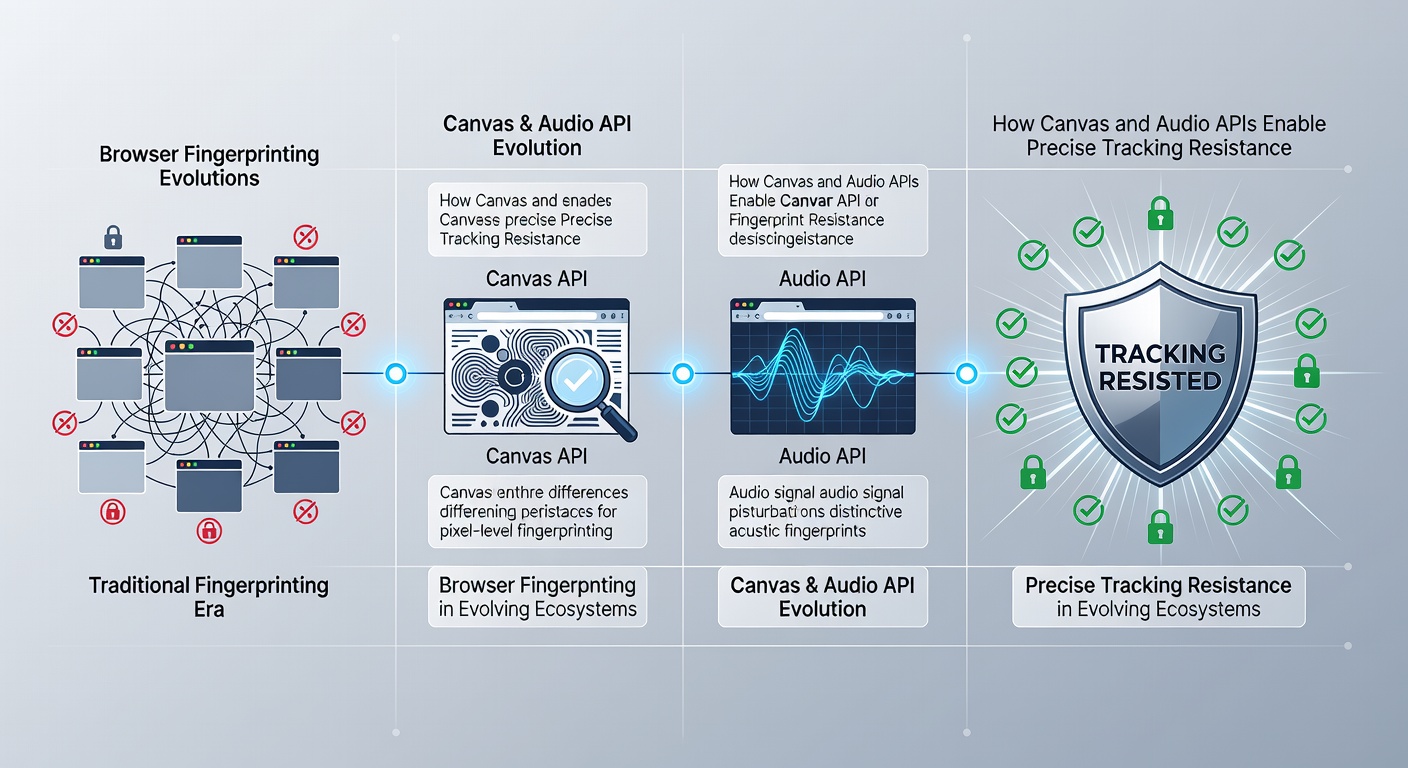
Everyday interactions on news sites, e-commerce platforms, adn productivity tools trigger these APIs without user awareness when scripts execute during page load. The combination of canvas text measurements with audio oscillator outputs creates composite fingerprints that maintain accuracy across incognito sessions and after cache clearing. Industry reports indicate adoption rates rose notably following cookie deprecation timelines set by major vendors in prior years.
Technical Evolutions Observed Through 2026
Updates to graphics drivers and audio frameworks in operating systems have prompted corresponding changes in fingerprinting code to maintain reliability. Scripts now incorporate fallback sequences that test multiple canvas contexts or audio node configurations when primary methods return inconsistent results. Academic analyses from institutions tracking web measurement have recorded gradual increases in the number of API calls per fingerprint attempt, reflecting efforts to compensate for protective measures added by browser vendors. These adaptations continue to function effectively in standard user workflows involving video playback, form interactions, and background resource loading.
Current Implementation Patterns
Web developers integrate fingerprint collection through lightweight libraries that execute canvas draws and audio tests within milliseconds of page initialization. The resulting identifiers feed into backend systems for session correlation and fraud detection without requiring persistent client storage. Geographic variations appear in deployment density, with higher concentrations observed in regions following data protection frameworks similar to those outlined by the Office of the Australian Information Commissioner. Resistance features in browsers, including canvas readback restrictions and audio context limitations, prompt ongoing adjustments rather than outright prevention of data collection.
Conclusion
Canvas and audio API techniques have become established elements in browser-based identification systems that function independently of third-party cookies. Their continued refinement through May 2026 demonstrates adaptation to both technical protections and changing web standards. Observers tracking these developments note that device signatures derived from rendering and audio processing remain viable for precise correlation across digital interactions in routine browsing scenarios.