Container Orchestration Patterns Reshaping Scalability in Modern Web Infrastructures
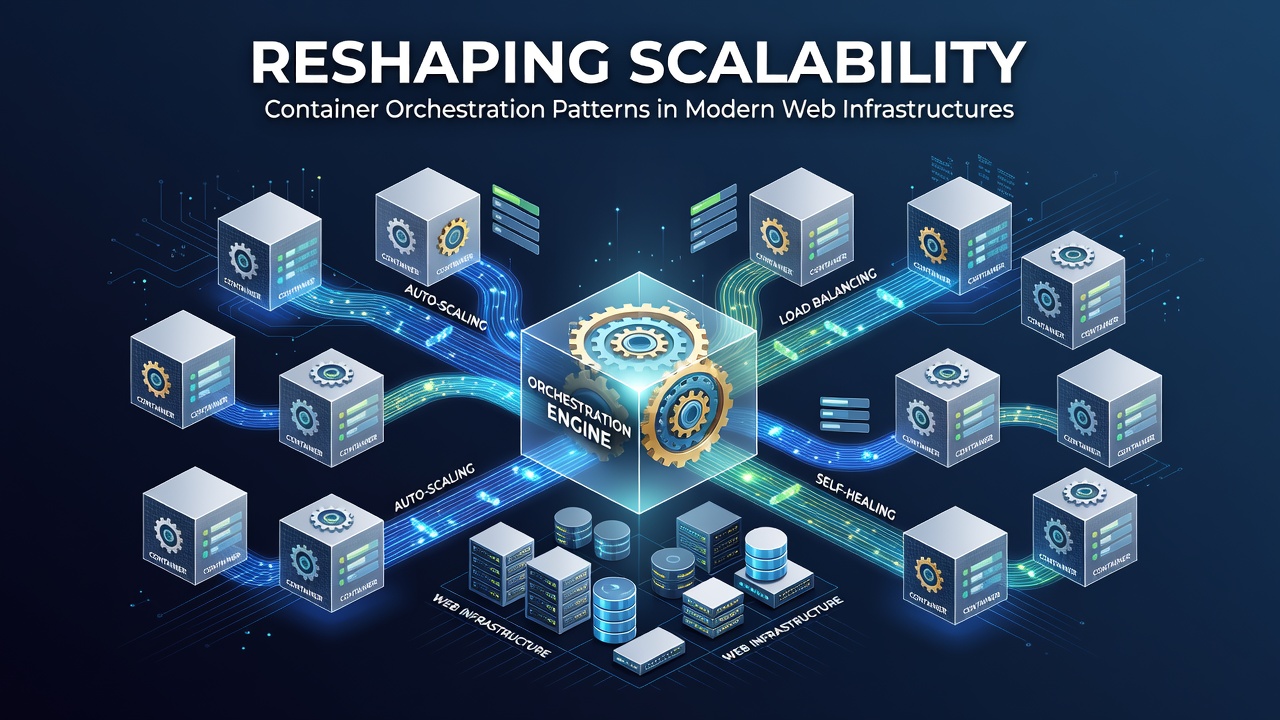
Container orchestration has evolved into a core mechanism for managing distributed applications across cloud environments, and patterns like horizontal pod autoscaling combined with service discovery continue to drive efficiency gains. Researchers at the Cloud Native Computing Foundation documented rising adoption rates through 2025, and those trends pointed toward further integration of advanced scheduling algorithms by mid-2026.
Core Patterns Driving Resource Allocation
Replica controllers maintain desired instance counts while adapting to traffic spikes, and this approach pairs with custom resource definitions that allow fine-grained control over CPU and memory limits. Experts tracking Kubernetes deployments note that operators now embed circuit breaker logic directly into sidecar containers, which prevents cascading failures when one service experiences overload. Data from industry surveys shows clusters handling millions of requests per second rely on these layered patterns rather than monolithic scaling scripts.
Service mesh implementations such as Istio add another dimension by routing traffic based on real-time metrics, and they integrate with autoscalers that respond to latency thresholds instead of simple CPU utilization. In July 2026, updates to the Kubernetes scheduler introduced topology-aware routing that reduced cross-zone data transfer costs for large-scale e-commerce platforms running in multi-region setups.
Scalability Through Event-Driven Coordination
Event-driven patterns leverage message queues to decouple producers from consumers, allowing orchestration platforms to spin up workers only when queue depths exceed defined limits. This method appears in financial services where transaction volumes fluctuate unpredictably, and orchestration tools coordinate the launch of temporary pods that process batches before terminating. Studies from research institutions in Canada highlight how such patterns cut idle resource usage by up to 40 percent compared with static provisioning models.
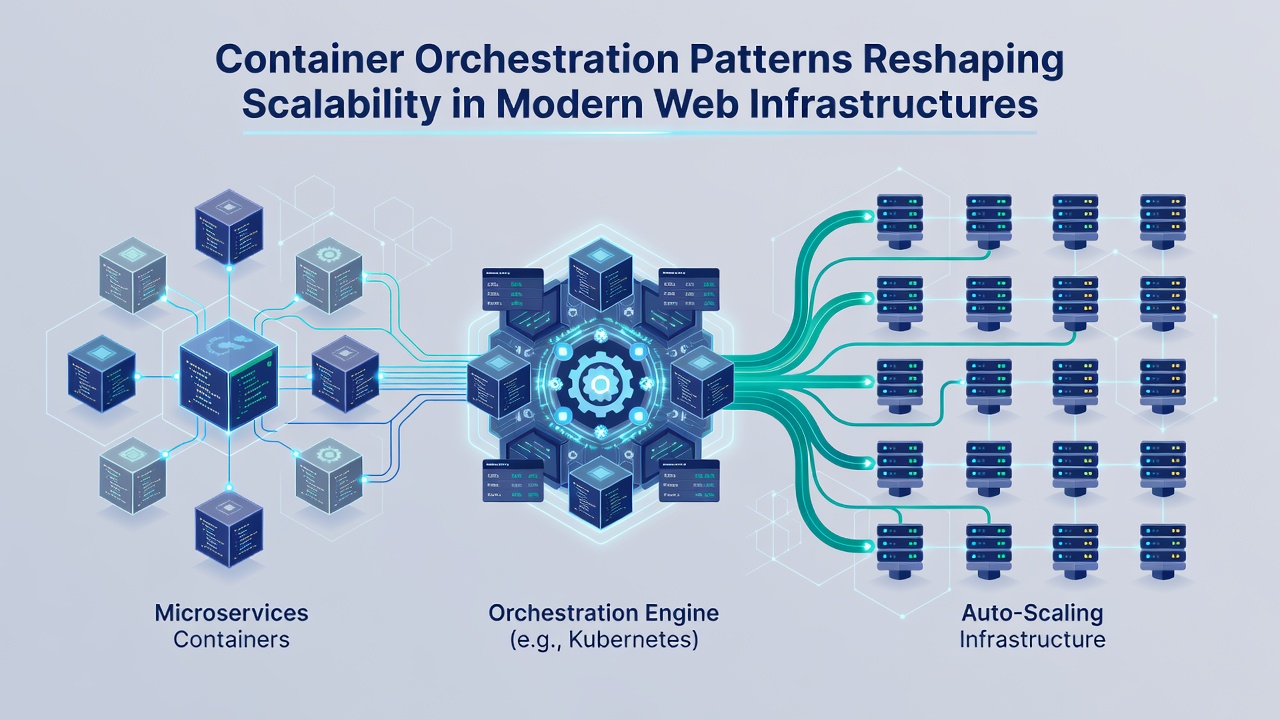
Observers tracking European cloud providers report that combining these event patterns with predictive models based on historical load data enables preemptive scaling ahead of peak periods like holiday shopping seasons. The result appears in reduced response times even as user bases grow into the tens of millions.
Integration With Infrastructure as Code
Declarative configuration files now serve as the single source of truth for orchestration states, and tools like Helm charts allow teams to version entire deployment patterns alongside application code. This practice supports rapid rollback when new scaling rules produce unexpected behavior, and it aligns with compliance requirements in regulated sectors such as healthcare. Figures from the Australian Digital Health Agency indicate that standardized orchestration templates have accelerated deployment cycles for patient-facing applications without compromising audit trails.
Network policies defined at the orchestration layer further enhance scalability by isolating traffic flows and preventing noisy neighbor effects within shared clusters. Administrators apply these policies through labels rather than manual firewall rules, which simplifies management as the number of microservices expands into the thousands.
Real-World Deployment Examples
One logistics company operating across North America deployed a custom operator that watches for shipment volume changes and adjusts worker pod counts accordingly, and this setup handled a 300 percent surge during peak shipping months without manual intervention. Similar patterns surface in media streaming services where content delivery nodes scale in response to viewer concurrency metrics collected through Prometheus exporters.
Academic analyses from institutions in the European Union emphasize that orchestration patterns incorporating chaos engineering tests uncover bottlenecks before they affect production traffic. Teams run controlled experiments that simulate node failures, then verify that autoscalers restore service levels within target windows measured in seconds rather than minutes.
Emerging Considerations for Future Growth
Edge computing introduces new variables as orchestration extends beyond centralized data centers into distributed locations with variable connectivity. Patterns that prioritize local decision-making while syncing state to core clusters reduce latency for applications such as real-time analytics in manufacturing environments. Reports compiled by international standards bodies project continued refinement of these hybrid models through the remainder of the decade.
Conclusion
Container orchestration patterns continue to mature through incremental improvements in scheduling, monitoring, and policy enforcement. Organizations that adopt these approaches gain measurable advantages in handling variable workloads while maintaining operational consistency across diverse infrastructure footprints. The trajectory observed through 2026 suggests further convergence between orchestration logic and machine learning-driven optimization techniques that refine resource decisions based on live telemetry.