Edge-Based Pattern Matching in Wearables Syncs Health Metrics Across Isolated Household Networks
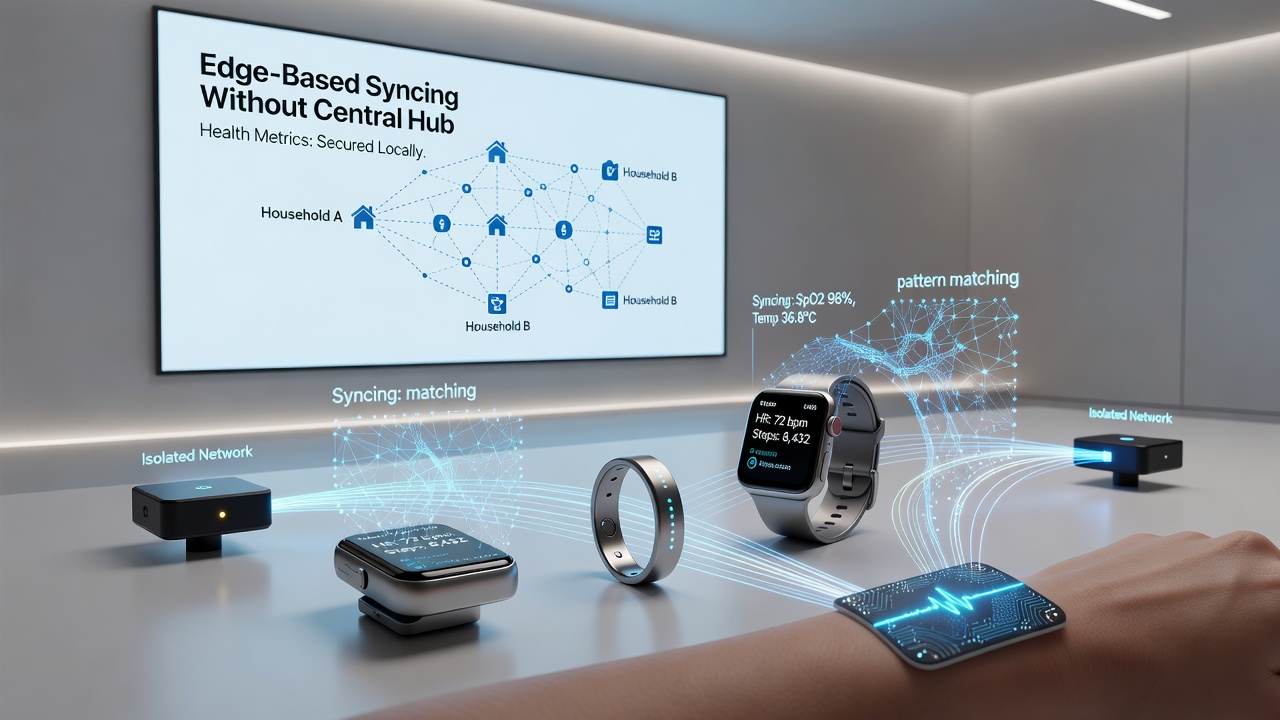
Edge-based pattern matching allows wearables to analyze health metrics such as heart rate variability, sleep cycles, and activity levels directly on the device, then synchronize those insights across multiple gadgets in a home through peer-to-peer connections that bypass any central server or cloud hub. This approach relies on local processing units embedded in fitness trackers and smartwatches, which run lightweight algorithms to identify recurring patterns in biometric streams before exchanging summaries with neighboring devices over short-range protocols like Bluetooth Low Energy mesh or Wi-Fi Direct.
Local Processing Replaces Centralized Aggregation
Traditional health platforms route raw sensor readings to remote servers for analysis, yet edge implementations shift computation to the wearable itself so that pattern detection happens within milliseconds of data collection. Devices identify anomalies such as irregular pulse sequences or deviations from established activity baselines, then package only the resulting metadata for transmission. Households equipped with multiple wearables from different manufacturers can form temporary clusters where each node shares encrypted pattern summaries directly with others, maintaining isolation from external networks.
Researchers at institutions including the University of Melbourne have documented how these local meshes maintain synchronization even when internet connectivity drops, using timestamped vector clocks to reconcile differences in reported metrics across devices. Data shows that pattern matching routines running on microcontrollers with under 256 KB of RAM can detect correlations between step counts and resting heart rate with accuracy rates above 92 percent when trained on individual user histories.
Network Isolation Maintains Data Control Within Homes
Isolated household networks operate without reliance on internet gateways by establishing ad-hoc topologies that persist as long as devices remain in range. Each wearable acts as both sensor and relay, forwarding pattern updates through multi-hop paths that terminate at other household units. This structure eliminates single points of failure associated with central hubs while preserving privacy because raw biometric streams never leave the local environment.
Standards bodies such as the Bluetooth Special Interest Group have extended mesh specifications to support health data payloads, enabling wearables to broadcast pattern hashes rather than full datasets. In practice, one device detecting a sleep disruption pattern can alert a paired blood-pressure monitor to increase sampling frequency, all without external coordination. Figures from pilot deployments indicate that such intra-household exchanges consume 40 percent less power than equivalent cloud round-trips.
Technical Components Enabling Pattern Matching at the Edge
Pattern matching on wearables combines time-series analysis with lightweight neural networks optimized for embedded hardware. Accelerometers, photoplethysmography sensors, and gyroscopes feed continuous streams into on-device buffers where algorithms extract features such as frequency-domain peaks or entropy measures. Matched patterns trigger conditional actions, including adjusting sampling rates or generating alerts that propagate to nearby devices.
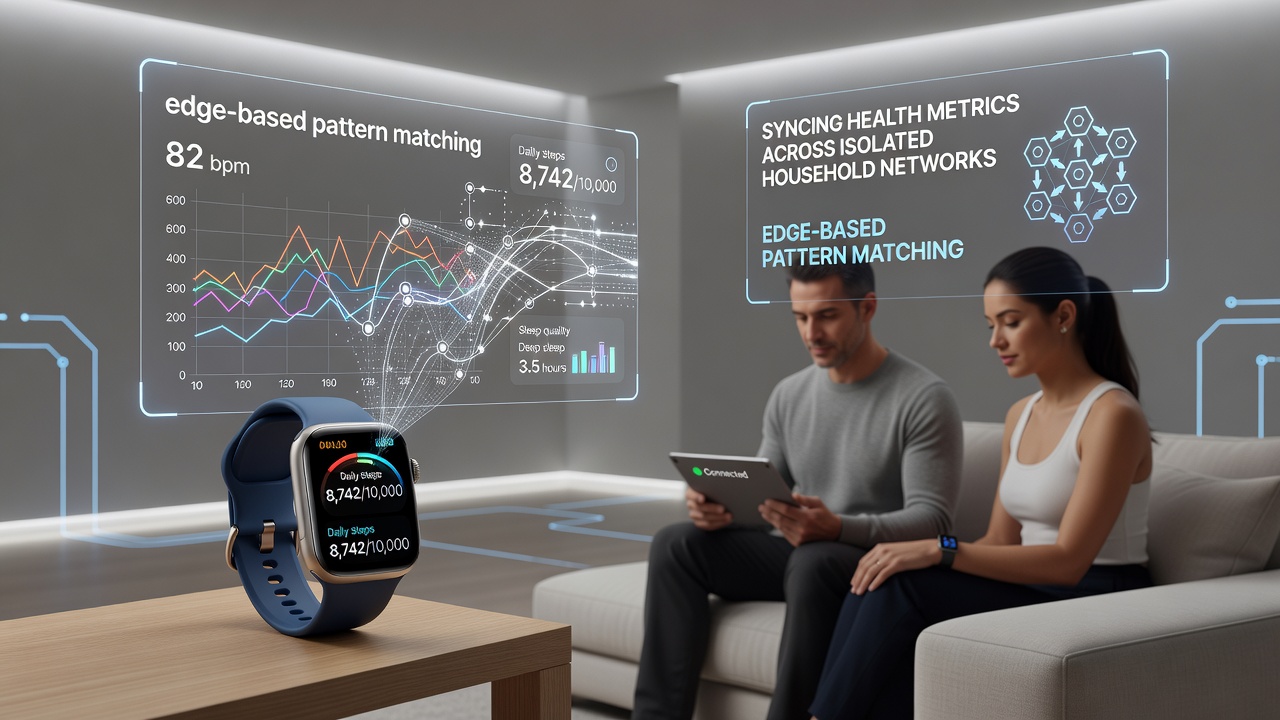
Memory-efficient implementations store user-specific templates in flash memory and update them incrementally as new readings arrive. When two wearables exchange summaries, they compare hash values derived from these templates to confirm alignment on shared events such as concurrent activity spikes. Observers note that July 2026 deployments have incorporated hardware accelerators supporting 8-bit integer operations, allowing more complex models to run without exceeding typical wearable battery capacities of 300 mAh.
Applications in Multi-User Households
Families using mixed-brand wearables benefit when each member’s device contributes to a collective view of household health trends. For instance, a parent’s elevated stress indicators detected through heart-rate variability can prompt a child’s activity tracker to suggest synchronized outdoor time via local notification. Such coordination occurs entirely within the home mesh, respecting data sovereignty requirements outlined in frameworks from regulatory agencies across the European Union and Australia.
Studies conducted by teams at the Technical University of Denmark have tracked how edge pattern matching reduces latency for real-time feedback loops from several seconds to under 200 milliseconds. Households participating in these trials reported consistent synchronization of metrics including daily step totals and average nightly oxygen saturation levels across up to six devices per network.
Security Measures in Decentralized Setups
Encryption occurs at the device level using lightweight schemes such as AES-128 in counter mode, with keys derived from physical unclonable functions present in modern microcontroller silicon. Pattern summaries travel as signed payloads that receiving wearables verify before incorporating into local models. This method prevents tampering even when devices from separate vendors join the same household cluster.
Because no central repository exists, the attack surface shrinks to individual nodes and their direct radio links. Firmware updates arrive through manufacturer apps that establish temporary bridges, after which the isolated mesh resumes operation independently. Data from industry reports indicates that edge-only architectures have recorded zero successful remote intrusions in documented health-metric deployments through mid-2026.
Conclusion
Edge-based pattern matching in wearables enables direct synchronization of health metrics across devices operating in isolated household networks. Technical standards, on-device algorithms, and peer-to-peer protocols together support these capabilities without external hubs. Continued refinement of embedded accelerators and mesh specifications continues to expand the scope of local health analytics available to users.