How Decentralized Identity Protocols Are Quietly Reshaping Data Controls in AI-Powered Mobile Tool Ecosystems
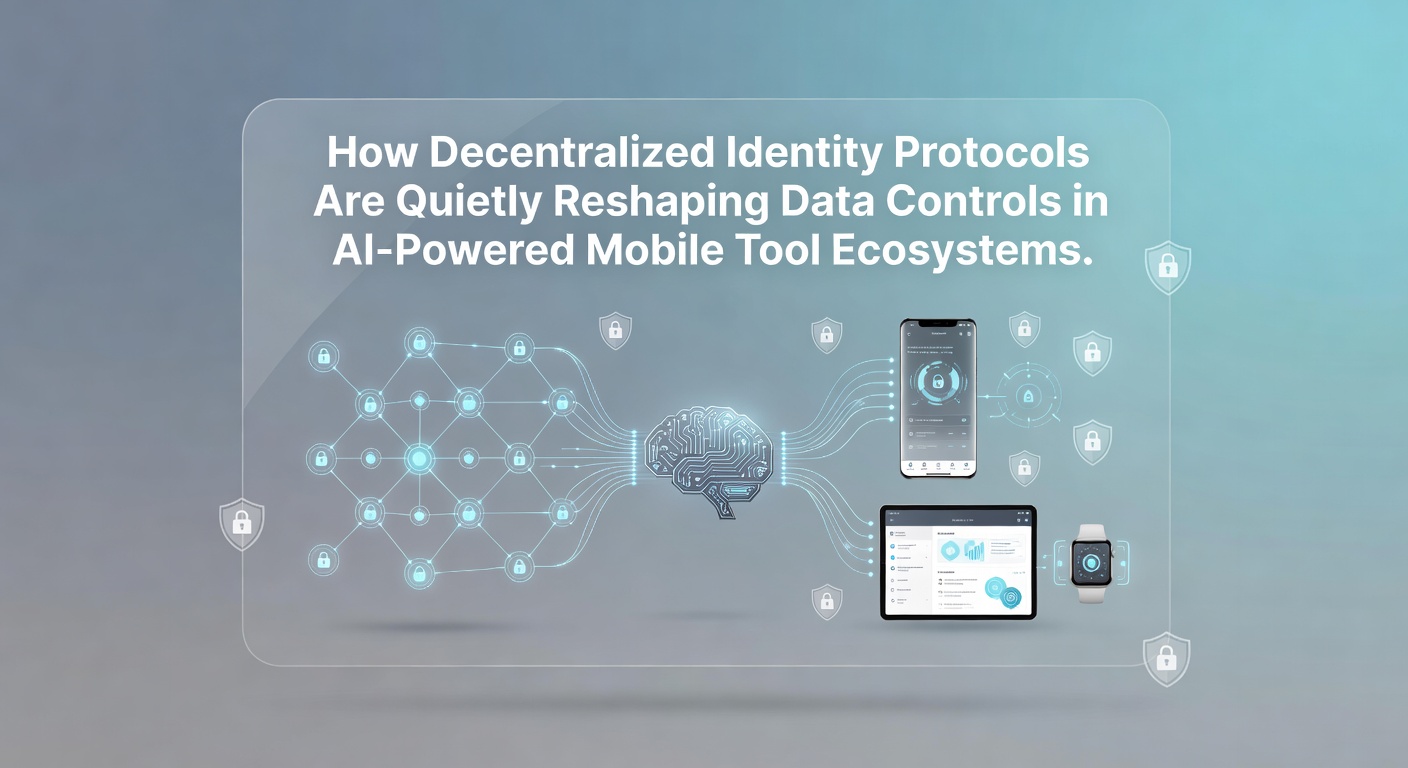
Decentralized identity protocols enable users to manage their own digital identifiers through distributed ledger systems rather than relying on centralized databases controlled by corporations or governments, and this approach has begun influencing how AI processes personal information within mobile applications. Protocols built around decentralized identifiers, or DIDs, along with verifiable credentials allow individuals to present proof of attributes without exposing underlying data, while AI models running on smartphones adapt their operations based on permissions tied directly to those credentials.
Core Mechanics Behind Decentralized Identity Systems
Developers implement these protocols by anchoring public keys and metadata to blockchains or distributed networks, so verification occurs through peer-to-peer exchanges instead of queries to single authorities. Mobile toolkits incorporate libraries that generate and resolve DIDs locally, which means AI components can request specific claims like age ranges or location history without accessing full user profiles. Researchers at various institutions have documented how this separation reduces the volume of data stored on central servers, as credentials remain encrypted on user devices until selective disclosure takes place.
Integration Patterns in AI-Enhanced Mobile Applications
AI-powered mobile tools now embed these identity layers to handle tasks such as personalized recommendations and real-time analytics while respecting user-defined boundaries. An application might use an AI engine to analyze health metrics collected from wearables, yet the underlying protocol ensures that only verified credential fragments reach the model, and processing stays confined to the device whenever possible. In May 2026, updates to several open-source mobile frameworks introduced native support for DID resolution alongside on-device inference engines, allowing seamless handoffs between identity verification and model inference without intermediate cloud calls.

What's interesting here is how the architecture shifts responsibility: instead of application servers dictating data retention policies, the protocols enforce rules encoded in the credentials themselves. AI systems therefore operate under constraints that travel with the data, such as time-limited access or purpose restrictions, and any attempt to aggregate information beyond those limits triggers automatic revocation signals back to the issuing party.
Effects on Data Control Mechanisms Across Ecosystems
Traditional mobile ecosystems centralize data flows through app stores and cloud providers, yet decentralized identity introduces granular controls that let users revoke access after initial sharing occurs. Data shows that adoption of these methods in enterprise mobile suites has correlated with measurable declines in unauthorized secondary uses of personal information, according to analyses published by the European Commission's digital strategy division. Observers note that AI training pipelines benefit when models receive only consented subsets, because the protocols embed audit trails that record every disclosure event on the distributed ledger.
Those who've studied implementations across regions report that regulatory alignment plays a supporting role; Canada's digital identity framework, for instance, references similar principles when outlining interoperability requirements for cross-border AI services. Mobile developers therefore design permission interfaces that surface these controls directly in app settings, so users adjust what attributes an AI component may reference without navigating external portals.
Observed Deployments and Technical Milestones
One study revealed that logistics applications using decentralized identity for driver verification combined with AI route optimization achieved faster compliance checks while maintaining lower data exposure rates than previous centralized versions. The same pattern appears in educational tools where AI tutors receive only credential-backed performance indicators, allowing personalization without compiling comprehensive student dossiers. Figures reveal growing participation from device manufacturers who bundle protocol support into operating system updates, reducing the friction for third-party AI developers to adopt the same standards.
But here's the thing: integration requires careful coordination between identity wallets and AI runtimes, because mismatched encryption schemes can introduce latency during real-time inference. Teams addressing this issue have released updated specification drafts that standardize key formats, which in turn streamlines testing across different mobile hardware configurations.
Conclusion
Decentralized identity protocols continue to embed themselves into the infrastructure supporting AI on mobile devices, altering how data access and retention decisions get made at the protocol level. As more frameworks incorporate these capabilities, the technical landscape favors user-held credentials over server-stored profiles, and ongoing standardization efforts keep expanding the range of verifiable claims available to on-device models. The result is a measurable redistribution of control that aligns technical capabilities with existing data governance expectations across multiple jurisdictions.