Neuromorphic Processing Units Enabling Instantaneous Pattern Matching in Wearable Health Monitors Without Cloud Dependency
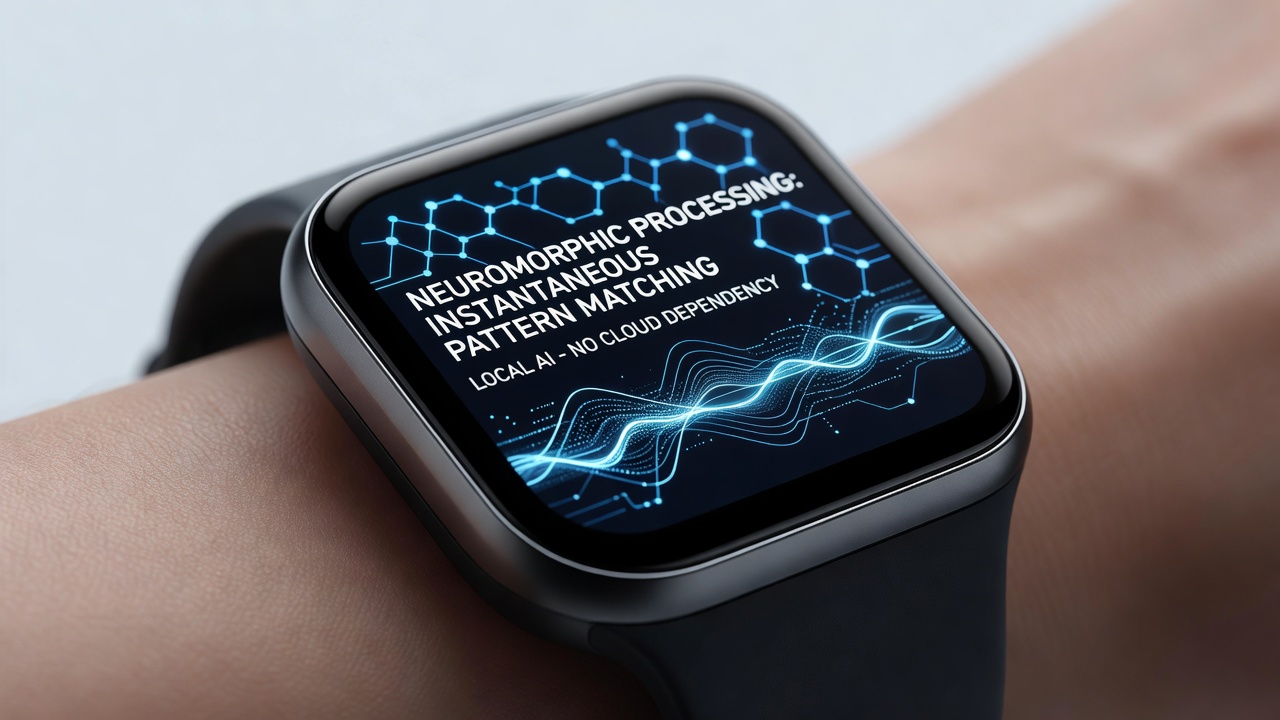
Neuromorphic processing units replicate the spiking behavior of biological neurons through specialized hardware architectures that process data in event-driven spikes rather than traditional clock cycles, and this approach allows wearable health monitors to perform pattern matching directly on the device. Engineers at multiple research institutions have integrated these units into compact sensors that track heart rhythms, detect anomalies in blood oxygen levels, and identify gait irregularities without transmitting raw data to remote servers.
Core Architecture Behind On-Device Pattern Recognition
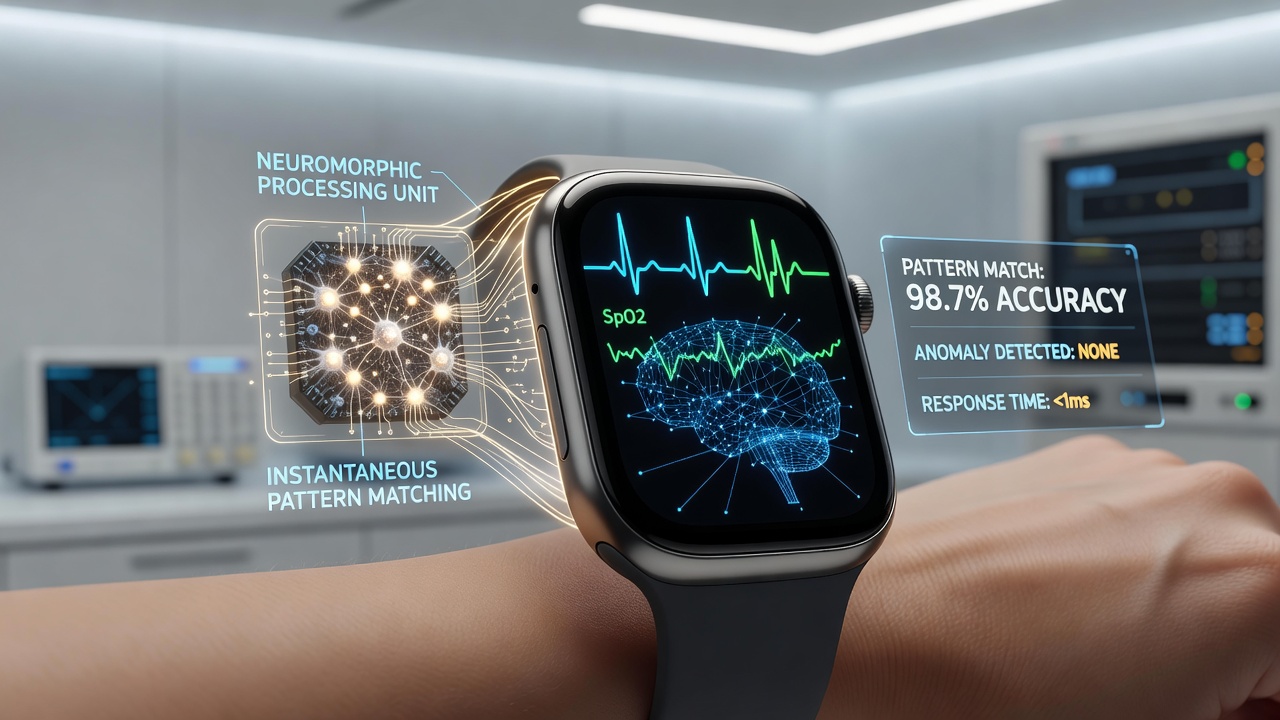
Traditional processors rely on sequential operations that consume significant power when handling continuous sensor streams, whereas neuromorphic designs use memristor arrays and asynchronous circuits to activate only when input signals cross threshold values, which reduces energy draw to microwatt levels during idle periods. Studies from university laboratories show these chips achieve latency under 10 milliseconds for matching complex physiological patterns such as arrhythmia sequences against stored templates.
Developers program the networks through spike-timing-dependent plasticity rules that adjust synaptic weights based on temporal correlations in incoming data, and this learning mechanism enables the hardware to adapt to individual user baselines over time without requiring external retraining cycles. In practice the system identifies deviations from normal heart rate variability or respiration patterns by comparing incoming spike trains against learned representations stored in on-chip memory.
Integration With Current Wearable Sensor Ecosystems
Health monitor manufacturers have begun embedding neuromorphic dies alongside existing microcontrollers in wrist-worn devices and chest patches, allowing simultaneous collection from optical, inertial, and electrochemical sensors while the neuromorphic core handles classification tasks locally. Data fusion occurs through dedicated interconnects that feed multi-modal inputs into a shared spiking network, which produces outputs such as alerts for atrial fibrillation or hypoglycemia indicators within the same cardiac cycle.
Observers note that this architecture eliminates round-trip delays associated with cloud queries, and field tests conducted through 2025 demonstrated sustained operation on single coin-cell batteries for periods exceeding 30 days under typical daily activity profiles. The approach also addresses data sovereignty concerns because sensitive biometric records remain confined to the device unless the user explicitly authorizes transfer.
Performance Metrics Reported in Recent Deployments
Independent evaluations published by research groups in Canada and Australia indicate that neuromorphic-enabled monitors reach pattern-matching accuracy rates above 96 percent for predefined cardiac events while consuming less than 5 percent of the power budget required by equivalent digital signal processing pipelines. Throughput measurements reveal the ability to evaluate thousands of candidate patterns per second using only millijoules of energy per inference.
June 2026 marks the scheduled release of updated reference designs from several semiconductor firms that incorporate larger crossbar arrays capable of storing expanded pattern libraries for additional conditions such as sleep apnea episodes and fall detection. These revisions maintain backward compatibility with existing Bluetooth Low Energy stacks, which permits seamless firmware updates on already deployed hardware.
Regulatory and Standards Landscape
Health authorities including the U.S. Food and Drug Administration have issued guidance documents outlining validation pathways for on-device machine learning algorithms in Class II medical devices, and similar frameworks from the European Medicines Agency emphasize traceability of training data used to initialize neuromorphic weights. Manufacturers must demonstrate that local inference produces equivalent clinical outcomes to centralized analysis under controlled study conditions.
Industry consortia have started drafting interoperability specifications that define spike encoding formats and memory map structures so that multiple vendors can supply compatible neuromorphic modules without requiring full system redesigns. These efforts aim to accelerate adoption across both consumer fitness trackers and clinical-grade monitoring platforms.
Future Hardware Roadmaps and Research Directions
Academic teams continue to explore hybrid designs that combine neuromorphic front-ends with conventional microcontrollers for handling user interface tasks, and early prototypes reveal improved thermal profiles because spike-based computation generates minimal heat during continuous monitoring. Partnerships between chip designers and sensor manufacturers have produced integrated packages that reduce board space by 40 percent compared with discrete component layouts.
Additional investigations focus on extending the approach to emerging sensing modalities such as continuous glucose monitoring through interstitial fluid analysis, where rapid pattern matching can flag excursions before they reach critical thresholds. Published roadmaps project further reductions in process node sizes that will allow inclusion of larger on-chip synaptic matrices within the same power envelope.
Conclusion
Neuromorphic processing units have moved from laboratory demonstrations to production-ready components that deliver instantaneous pattern matching inside wearable health monitors, and the technology operates entirely without cloud connectivity. Deployment data accumulated through 2025 and into mid-2026 confirm sustained accuracy alongside extended battery life while satisfying emerging regulatory requirements for local data handling. Continued refinements in hardware density and software tooling position the approach for broader integration across medical and wellness applications.