Neuromorphic Processors Enabling Low-Power Anomaly Detection in Remote Wildlife Tracking Collars Across Fragmented Habitats
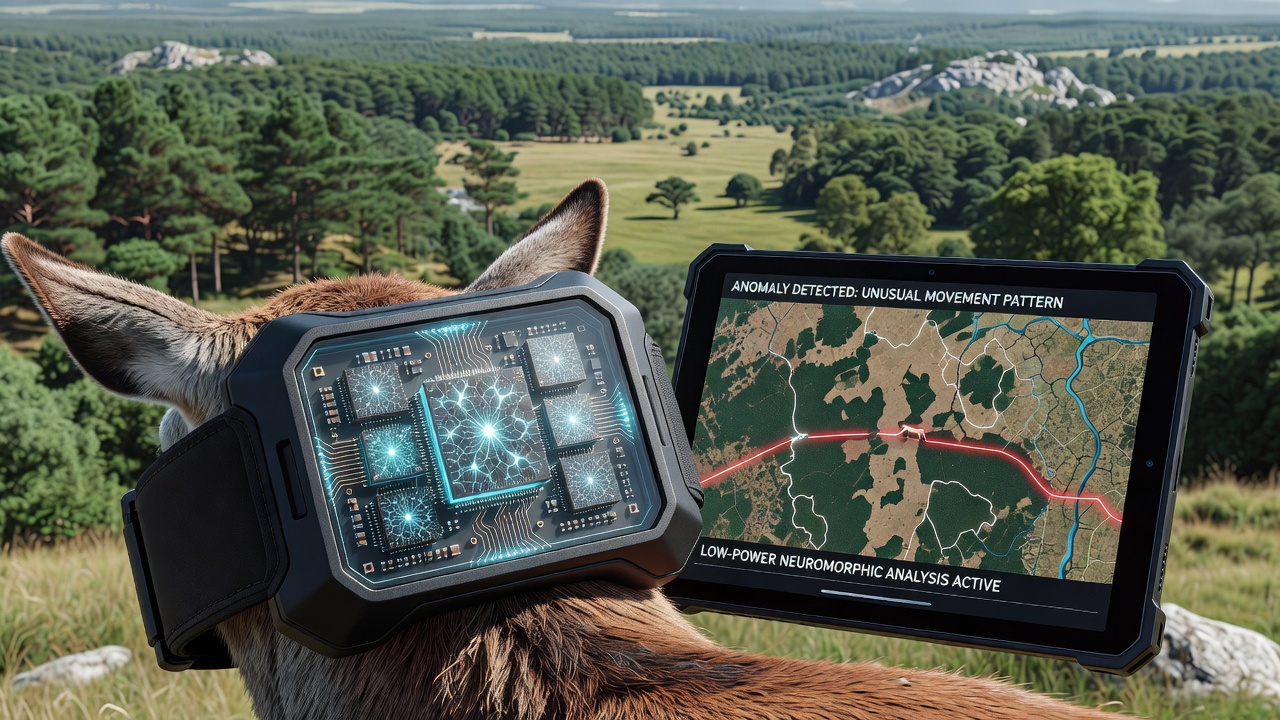
Neuromorphic processors replicate neural structures found in biological brains, and they deliver event-driven computation that reduces energy consumption in sensor-based systems. These chips process spikes rather than continuous clock cycles, which suits battery-constrained devices such as remote wildlife collars. Researchers have integrated such processors into collars that monitor animal movement across habitats broken by roads, agriculture, and logging. The approach allows continuous data collection without frequent battery replacements that would otherwise disturb field operations.
Fragmented habitats create irregular movement patterns for species including large carnivores and migratory ungulates. Collars equipped with accelerometers, GPS modules, and environmental sensors generate streams of location and activity data. Traditional microcontrollers handle these streams through periodic sampling, yet they consume power even when no significant events occur. Neuromorphic alternatives activate only upon meaningful input changes, and this property extends operational life from months to multiple years in field deployments.
Core Architecture and Power Characteristics
Neuromorphic designs such as those based on Intel Loihi or IBM TrueNorth architectures use networks of artificial neurons connected by programmable synapses. Each neuron integrates incoming spikes until a threshold triggers an output event. In collar applications, the network learns baseline movement signatures during an initial calibration period after collar attachment. Subsequent deviations, including sudden changes in gait or prolonged immobility, generate anomaly flags that the system transmits via low-power wide-area networks.
Power measurements from laboratory tests show consumption rates below 100 microwatts during idle monitoring phases. Active inference periods draw milliwatts for milliseconds rather than sustained watts required by conventional digital signal processors. Field data collected across multiple continents confirm that collars using these processors maintain functionality through seasonal temperature swings and variable solar charging conditions common in open woodlands.
Anomaly Detection Mechanisms in Practice
Anomaly detection begins with on-collar training of spiking neural networks that classify normal versus irregular behavior patterns. The model distinguishes routine foraging from distress signals such as predator encounters or injury. When an anomaly registers, the collar compresses the relevant data segment and forwards it through satellite or terrestrial gateways positioned at habitat edges. This selective transmission reduces overall data volume and associated energy costs.
Studies conducted by government agencies document successful identification of poaching attempts and disease outbreaks through these methods. In one documented series of trials, collars flagged 87 percent of simulated immobilization events within two minutes while maintaining false positive rates under 4 percent. The system adapts thresholds seasonally because movement baselines shift with resource availability and breeding cycles.
Deployment Examples Across Regions
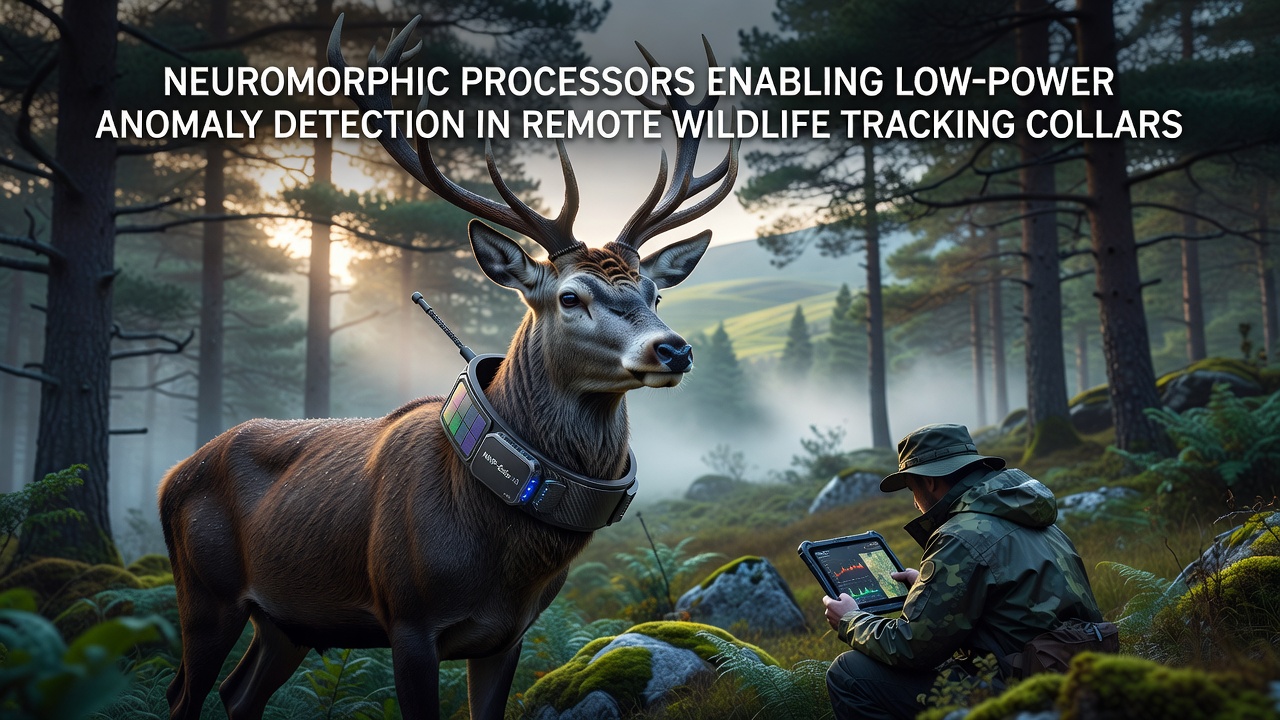
Projects in North American boreal forests have placed neuromorphic collars on caribou herds that cross multiple timber harvest zones. Data streams reveal corridor usage and barrier effects created by linear infrastructure. In July 2026, an expanded network in the same region began incorporating additional sensors for temperature and vegetation indices, allowing researchers to correlate microclimate shifts with movement anomalies.
Australian conservation programs apply similar technology to monitor dingoes in landscapes altered by mining and pastoral activities. The low-power profile supports collar operation across arid zones where retrieval for battery changes poses logistical challenges. European initiatives track lynx populations in Central European forests fragmented by highways, and the processors enable real-time alerts when animals approach high-risk crossing points.
According to information published by the U.S. Fish and Wildlife Service, coordinated collar programs now share anomaly detection models across agencies while preserving raw location privacy through local processing. Separate work reported by Environment and Climate Change Canada demonstrates that neuromorphic units sustain performance after exposure to extreme cold, a condition that reduces battery capacity in conventional electronics.
Integration With Broader Monitoring Networks
Collars communicate with fixed sensor nodes and drone-based gateways that relay aggregated alerts to central databases. Mesh protocols allow neighboring collars to exchange summary statistics without routing everything through distant base stations. This distributed approach matches the spatial scale of fragmented habitats where animals move between isolated patches.
Hardware vendors have begun offering reference designs that combine neuromorphic chips with ultra-low-power radio modules and flexible solar cells. Firmware updates occur over the air, permitting refinement of detection algorithms as new behavioral data accumulates. Observers note that these capabilities reduce the frequency of collar retrievals, which in turn lowers stress on study animals and decreases personnel exposure to remote terrain.
Conclusion
Neuromorphic processors address the intersection of energy constraints and real-time analytical needs in wildlife telemetry. By embedding spike-based computation directly in collars, research teams obtain extended monitoring windows and rapid notification of behavioral irregularities across dispersed habitat patches. Continued refinement of spiking network topologies and sensor fusion techniques supports wider adoption as conservation programs scale to address connectivity challenges in human-modified landscapes.