Portable Device Processors Managing Complex Computations for Augmented Reality Overlays in Navigation Applications
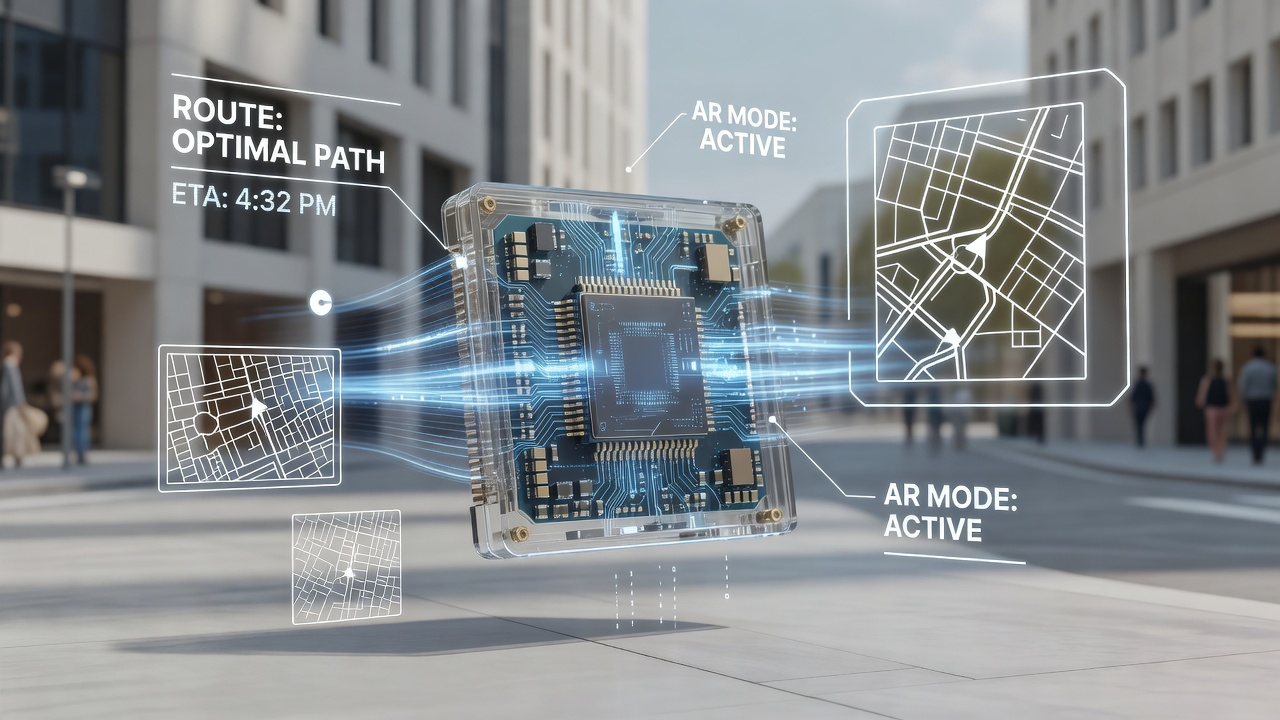
Portable device processors now handle intricate workloads required for augmented reality overlays within navigation applications, and these chips integrate central processing units, graphics processing units, and neural processing units to manage simultaneous tasks such as real-time mapping, object detection, and spatial anchoring. Manufacturers design these systems to process camera feeds, sensor data from gyroscopes and accelerometers, and global positioning information without relying on constant cloud connections, while the result supports seamless digital arrows, lane indicators, and landmark labels that appear aligned with the physical environment through the device screen.
Core Processing Capabilities in Modern Chipsets
Chip architectures from companies including Qualcomm, Apple, and MediaTek incorporate dedicated accelerators that execute computer vision algorithms at speeds suitable for continuous video streams, and these accelerators perform simultaneous localization and mapping computations by analyzing feature points across successive frames. Data from device benchmarks show that processors released after 2024 sustain frame rates above 30 per second during AR sessions, whereas earlier generations often dropped below 20 frames under similar loads because thermal throttling intervened sooner.
Memory bandwidth and on-chip cache sizes have grown substantially, allowing temporary storage of high-resolution maps and depth buffers without frequent transfers to slower external memory, and this improvement reduces latency when an application switches between standard map views and full AR mode. In July 2026, supply chain analyses indicated that average power draw for such AR workloads on flagship handsets had fallen by approximately 18 percent compared with 2024 models, largely because newer fabrication nodes lowered voltage requirements while maintaining clock speeds.
Integration with Everyday Navigation Software
Popular navigation platforms now activate AR modes that project directional cues directly onto live camera imagery, and the processor must fuse location data from multiple sources to keep virtual elements stable as the user moves. Engineers achieve this stability through sensor fusion pipelines that combine visual odometry with inertial measurements, and the entire pipeline runs locally on the device to maintain functionality in areas with limited connectivity. According to a technical overview published by the European Commission's Joint Research Centre, these local pipelines account for the majority of computational cycles during typical urban navigation sessions lasting under thirty minutes.
Applications also render three-dimensional building models and turn-by-turn instructions that respond to changes in user orientation within milliseconds, and the graphics pipeline must handle dynamic lighting adjustments so overlays remain visible under direct sunlight or nighttime conditions. Observers note that battery impact remains manageable because dedicated hardware blocks handle the most repetitive matrix operations, leaving the main central processing unit free for higher-level route planning logic.
Performance Metrics and Real-World Deployment
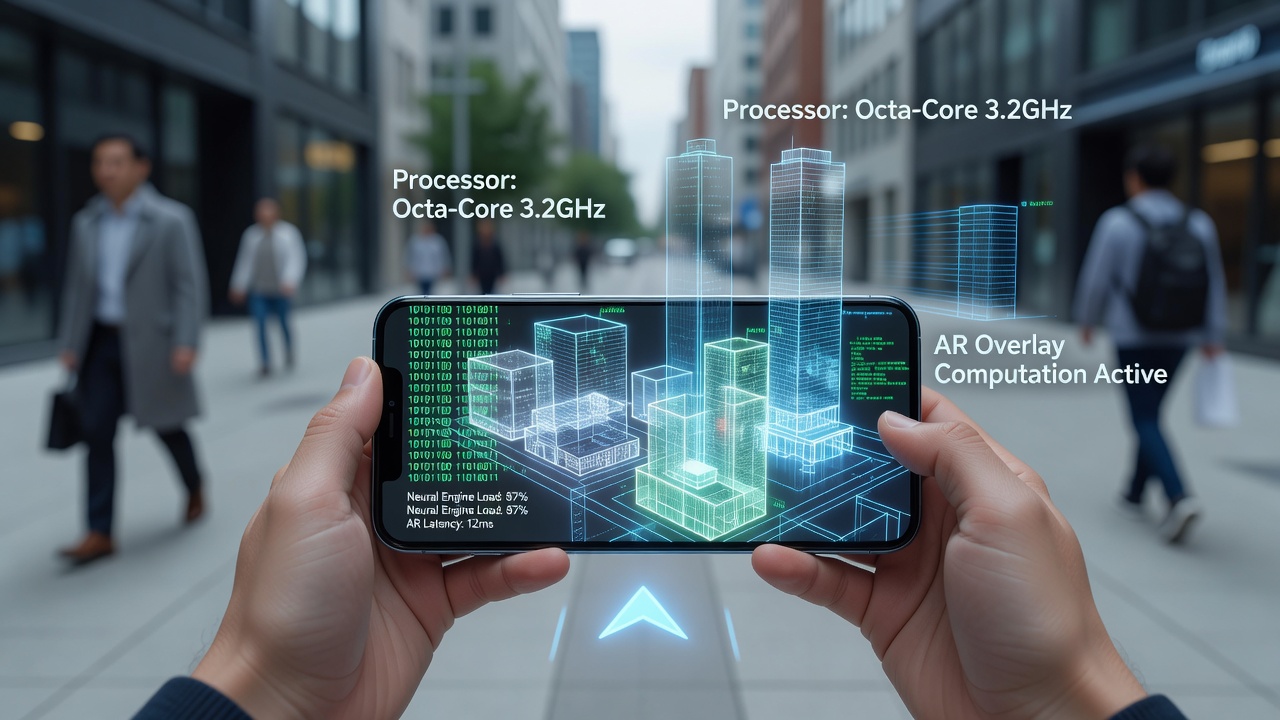
Field tests conducted across multiple cities have measured end-to-end latency from camera capture to overlay rendering, and results typically fall between 25 and 40 milliseconds on current hardware when optimized software frameworks are used. Such figures allow users to maintain natural walking speeds without perceiving misalignment between digital cues and physical streets. Research groups at institutions including the University of Melbourne have published datasets showing that processor utilization peaks during initial map loading yet stabilizes once the AR session enters steady state.
Thermal design remains a limiting factor during extended use, so device makers distribute heat across the chassis and employ dynamic frequency scaling to prevent sustained high temperatures, and these techniques keep skin temperatures within comfortable ranges even when the graphics processor runs near maximum load. Industry reports further indicate that software updates delivered in 2025 and 2026 refined scheduling algorithms, allowing background navigation tasks to share processor resources more efficiently with foreground AR rendering threads.
Emerging Standards and Future Hardware Directions
Industry consortia continue to refine application programming interfaces that expose specialized processor features to developers, and these interfaces simplify access to depth sensors and machine-learning accelerators without requiring low-level hardware knowledge. As a consequence, smaller application teams can incorporate AR overlays into niche navigation tools aimed at cyclists, hikers, or delivery personnel. A 2025 white paper from Canada's National Research Council highlighted how standardized interfaces accelerate deployment across different handset models while preserving energy efficiency targets set by regulatory bodies.
Upcoming processor revisions are expected to add dedicated ray-tracing hardware blocks that improve rendering quality for complex three-dimensional overlays, yet current silicon already supports the majority of features demanded by today's navigation applications. Continued refinement of compiler toolchains further helps developers extract additional performance from existing neural engines without increasing code complexity.
Conclusion
Portable device processors have reached the point where they sustain the full computational stack needed for reliable augmented reality navigation on consumer hardware, and ongoing improvements in architecture, software scheduling, and thermal management continue to expand practical usage scenarios. Measurements collected through mid-2026 confirm that these systems deliver consistent frame rates and acceptable power profiles across diverse environments, while standards work ensures broader compatibility among applications and devices. The combination of local processing and refined sensor fusion keeps augmented overlays accurate and responsive without external dependencies that could compromise availability.