Sensor Fusion Techniques in Consumer Electronics Yielding New Possibilities for Data Analytics in Healthcare Apps
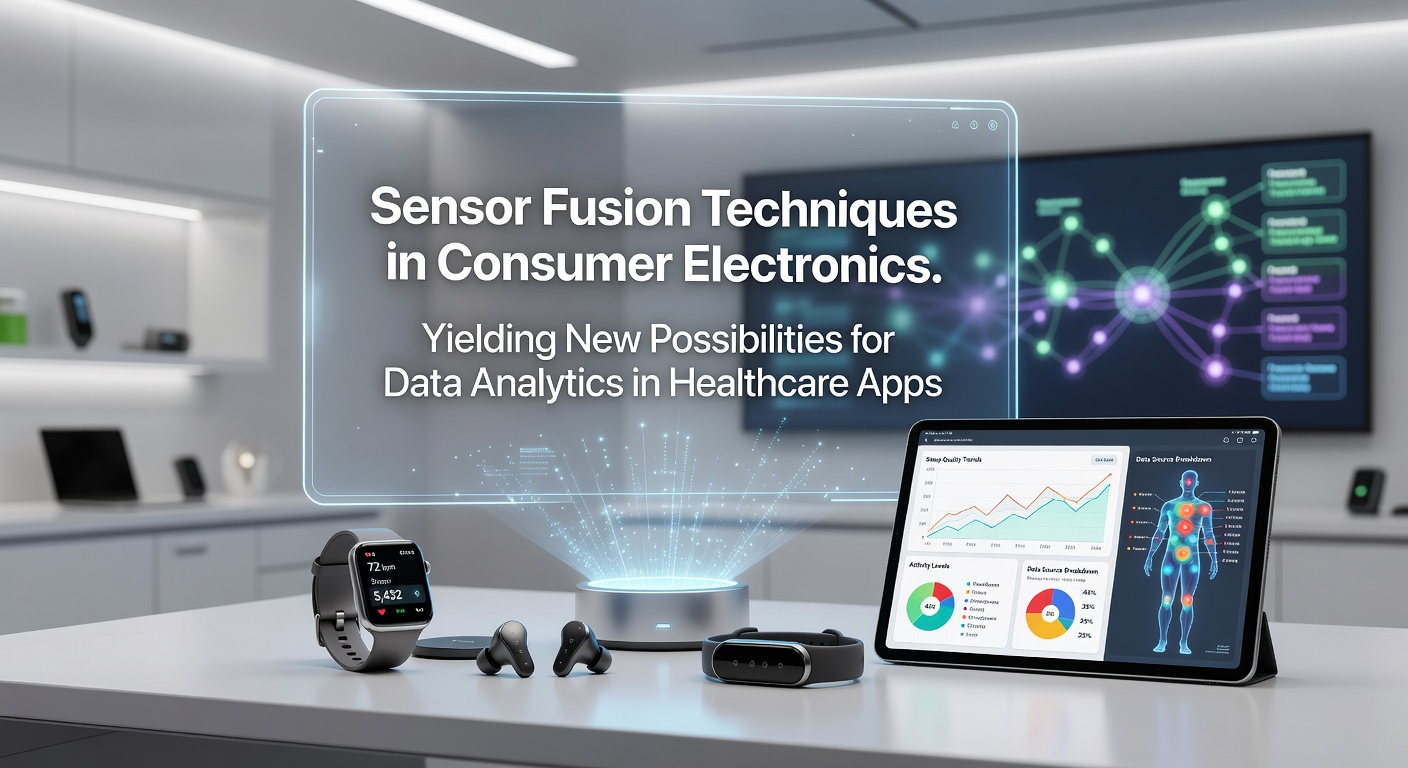
Consumer electronics have incorporated sensor fusion methods that combine inputs from accelerometers, gyroscopes, magnetometers, and optical heart rate monitors, and these approaches generate richer datasets for healthcare applications running on smartphones and wearables. Engineers apply algorithms such as Kalman filters and particle filters to reconcile noisy readings into coherent streams that reflect user movement, posture, and physiological signals with greater accuracy than single-sensor systems allow.
Device manufacturers began scaling these techniques after 2023 as micro-electro-mechanical systems became smaller and more power-efficient, and by June 2026 several flagship smartphones and smartwatches routinely fuse data across six or more sensors to support continuous monitoring without draining batteries in under a day. Healthcare apps then process the fused outputs locally or through secure cloud gateways to track metrics including gait stability, respiratory rate during sleep, and heart rate variability during exercise.
Core Sensor Fusion Methods in Everyday Devices
Manufacturers rely on complementary and Kalman-based fusion to align orientation data with linear acceleration, while machine-learning models trained on labeled motion datasets refine estimates of activity type and intensity. Studies published by research groups at the University of Toronto show that fused inertial and photoplethysmography signals improve step-count accuracy by up to 18 percent compared with isolated accelerometer processing. The same pipelines feed into apps that estimate energy expenditure and flag irregular movement patterns associated with fall risk.
Because raw sensor streams contain redundancy and interference, developers implement context-aware weighting that adjusts trust levels based on device placement and user context, and this adaptive layer prevents erroneous readings when a phone sits in a pocket versus when it is strapped to a wrist. Observers note that such refinements have enabled apps to distinguish between walking on flat surfaces and climbing stairs with precision sufficient for clinical-grade rehabilitation tracking.
Expanding Analytics Capabilities in Healthcare Applications
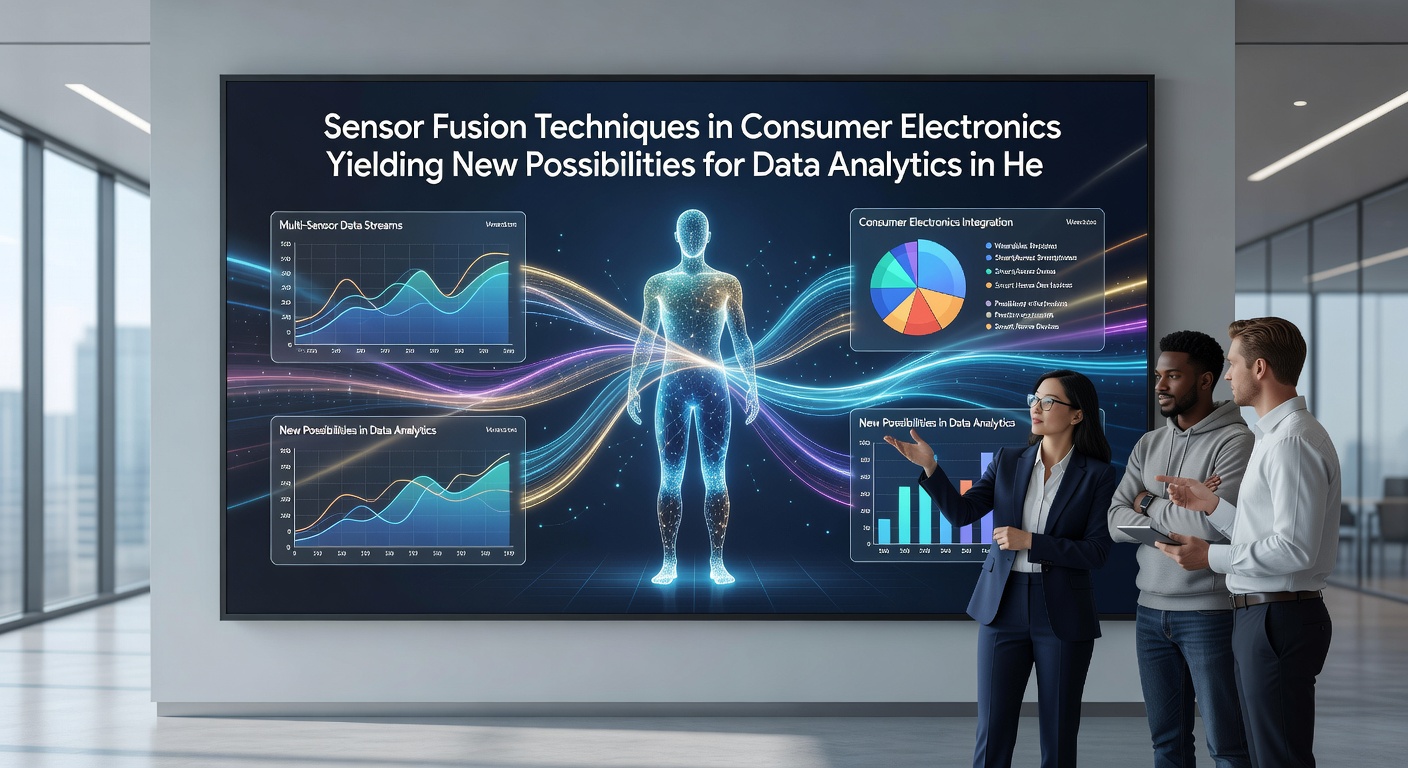
Once fused data reaches healthcare apps, developers apply time-series analysis and anomaly detection models to surface trends that single-point measurements often miss. For example, combining gyroscope-derived balance information with heart-rate recovery curves allows an app to generate daily cardiovascular load scores that correlate with established stress-test results in validation trials conducted at Australian research hospitals. These scores help users and clinicians adjust exercise prescriptions without requiring laboratory visits.
Population-level aggregation of anonymized fused datasets further supports epidemiological modeling, and figures released by Health Canada in early 2026 indicate that aggregated mobility and cardiac metrics from consumer devices have improved early detection rates for atrial fibrillation episodes in community settings by 12 percent over traditional screening methods. App developers integrate these analytics into dashboards that display weekly summaries alongside personalized recommendations derived from longitudinal patterns.
Integration Challenges and Technical Solutions
Power consumption and data latency remain central constraints when multiple sensors operate simultaneously, yet advances in edge processing chips allow preliminary fusion on the device before transmission occurs. European Commission-funded projects have documented reductions in cloud upload volumes of 40 percent when devices perform on-board Kalman smoothing and transmit only derived features rather than full raw streams. This approach also lowers exposure of identifiable movement signatures during wireless transfer.
Calibration drift over months of use poses another hurdle, and manufacturers now embed self-calibration routines that compare sensor outputs against occasional GPS or barometric references during outdoor activity. Research teams at the Technical University of Denmark report that these routines maintain orientation accuracy within 2 degrees after six months of daily wear, supporting reliable long-term analytics for chronic-condition management programs.
Regulatory and Standardization Developments
Health authorities have begun issuing guidance on validating fused-sensor outputs for clinical decision support, and the U.S. Food and Drug Administration updated its digital health guidance documents in 2025 to include performance benchmarks for multi-sensor algorithms used in wellness and diagnostic apps. Similar frameworks from Singapore’s Health Sciences Authority emphasize reproducibility testing across diverse body types and activity levels, ensuring that analytics remain consistent regardless of user demographics.
Industry consortia have published open datasets containing synchronized multi-sensor recordings from thousands of participants, and these resources accelerate algorithm development while providing standardized test cases for regulatory submissions. As of June 2026 several commercial apps have received clearance for specific claims related to gait analysis and arrhythmia screening based on evidence generated from such shared repositories.
Future Directions for Data Analytics
Emerging work focuses on incorporating environmental sensors such as barometers and ambient-light detectors into fusion pipelines to contextualize physiological readings, and early implementations already adjust heart-rate interpretations according to altitude and temperature. These richer contexts enable apps to differentiate exertion responses that occur during high-altitude hiking versus indoor treadmill sessions, refining personalized training zones.
Researchers continue exploring graph-based fusion architectures that treat each sensor stream as a node in a dynamic network, allowing the system to reroute processing when one sensor fails or becomes unreliable. Pilot deployments in rehabilitation centers demonstrate that such resilient architectures sustain continuous monitoring even when individual components encounter temporary interference, thereby preserving data continuity for longitudinal studies.
Conclusion
Sensor fusion techniques embedded in consumer electronics have expanded the granularity and reliability of data available to healthcare apps, and ongoing refinements in algorithms, hardware efficiency, and regulatory pathways continue to broaden their utility. As device fleets incorporate additional sensing modalities and edge-computing capacity grows, analytics derived from fused streams will support increasingly precise monitoring and intervention strategies across diverse health domains.