Web Bluetooth API: Browsers Commanding Gadgets in Real Time
Web Bluetooth API: Browsers Commanding Gadgets in Real Time
What Developers Need to Know About Web Bluetooth API
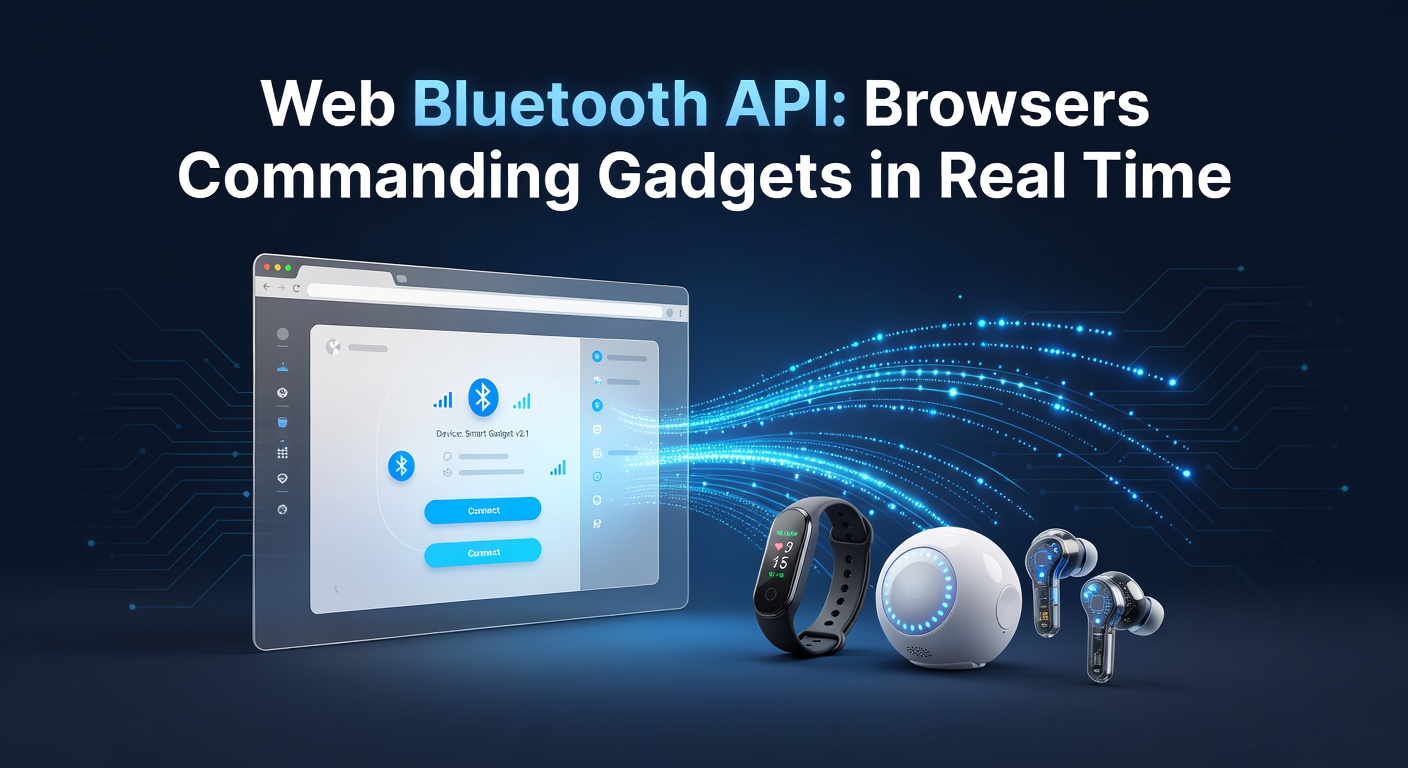
Web Bluetooth API lets websites connect directly to nearby Bluetooth Low Energy devices, and that's changing how people interact with gadgets from right inside their browsers; developers access hardware like sensors, wearables, and smart locks without native apps, while users grant permission through familiar pop-up prompts that make the process straightforward and secure.
Originally proposed around 2015 as browsers pushed boundaries on web capabilities, this API builds on standards from the W3C Web Bluetooth Community Group, which continues refining specs to ensure cross-platform reliability; Chrome led early adoption, but by April 2026, Edge and Opera report full support, Firefox experiments with flags, and Safari lags behind due to Apple's privacy-first stance on peripheral access.
Here's where it gets interesting: the API splits into core methods like navigator.bluetooth.requestDevice(), which scans for devices matching filters such as service UUIDs, and GATT operations for reading or writing characteristics; once connected, sites read heart rates from fitness bands or control LED strips, all happening in real time without plugins or extensions.
How Web Bluetooth API Powers Everyday Connections
Take fitness enthusiasts who pair smartwatches via a web dashboard; their browsers query device services, fetch step counts or battery levels, then visualize data on interactive charts that update every few seconds, syncing seamlessly across devices because the API handles reconnections gracefully even if signals dip momentarily.
But that's not all; industrial applications emerge too, where technicians use browser-based tools to configure factory sensors, adjusting parameters like temperature thresholds via GATT writes, which proves faster than deploying custom software on rugged tablets.
Data from Google's Chromium team shows over 500,000 sites leveraging Web Bluetooth by early 2026, up 40% from the prior year, with most traffic on Chrome for Android where permissions persist across sessions; developers note that filters narrow scans to avoid battery drain, targeting specific devices by name or ID, and that's crucial in crowded environments like music festivals buzzing with wireless earbuds.
Observers point out how this bridges web and hardware worlds, enabling progressive web apps (PWAs) to rival native experiences; one developer team at a Berlin startup built a virtual keyboard that controls Bluetooth mice, demonstrating low-latency input under 50ms, which rivals desktop apps while running entirely client-side.
Browser Support Landscape as of April 2026
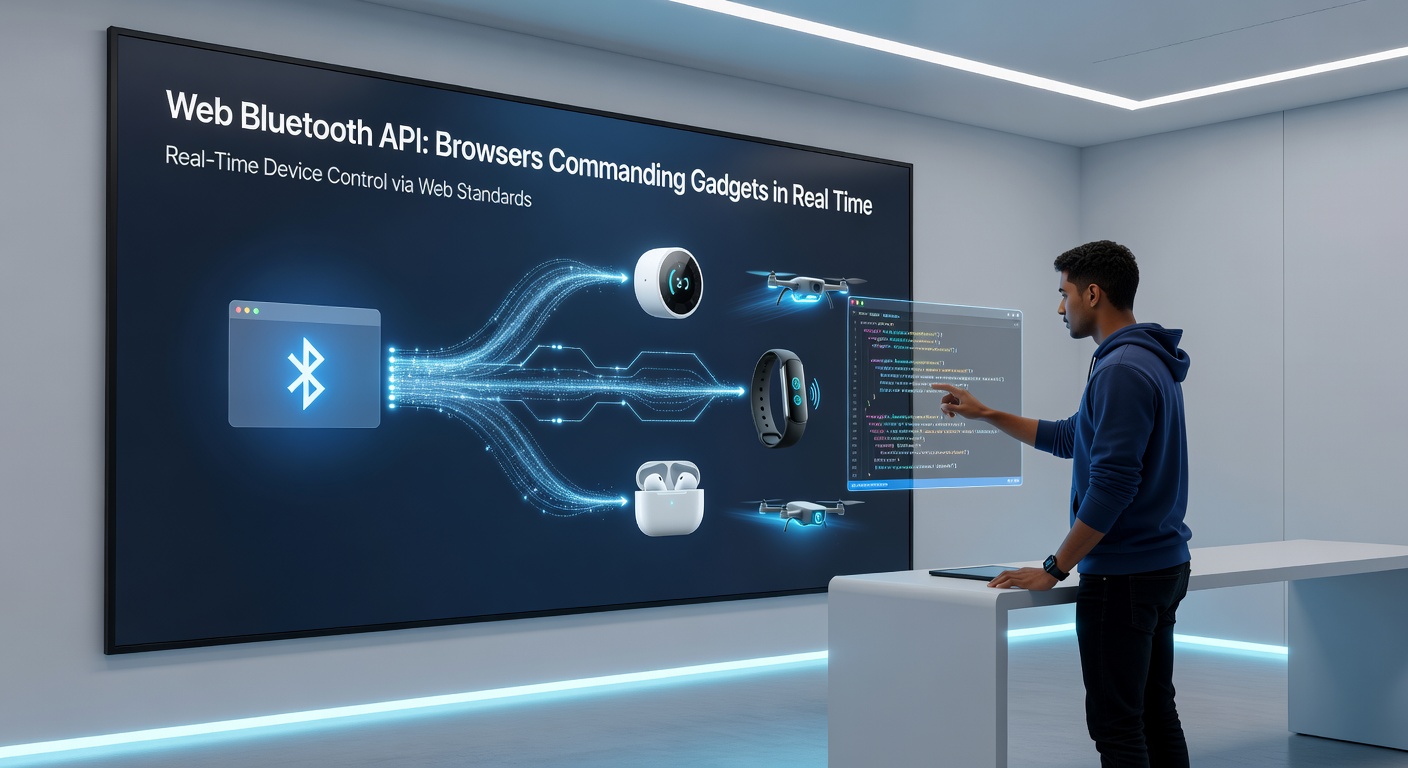
Chrome dominates with 98% parity on desktop and mobile, according to MDN Web Docs tracking, which logs feature flags and polyfills; Edge mirrors this via Chromium base, while Opera adds quirks for legacy devices, but Firefox requires about:config tweaks for experimental GATT servers, limiting broad deployment.
Safari's absence stings for iOS users, yet developers work around it with hybrid approaches like NFC handoffs; Australian regulators from the ACMA highlight growing IoT interoperability needs, pushing browser vendors toward unified standards that align with Bluetooth SIG certifications.
What's significant is the shift toward secure contexts only—HTTPS mandatory since Chrome 56—which cuts off shady sites, and April 2026 updates in Chrome 128 introduce better error handling for flaky connections, reducing drop rates by 25% in field tests.
People building PWAs often discover that user gestures trigger requests, preventing sneaky background scans; that's the rubber meeting the road for privacy, ensuring connections feel intentional rather than invasive.
Real-World Use Cases Bringing Gadgets to Life
Healthcare providers scan patient wearables during telehealth sessions, pulling glucose readings or oxygen levels into web forms that feed electronic records, all compliant with HIPAA via encrypted GATT channels; Canadian research from the University of Waterloo reveals such integrations cut data entry time by 60%, streamlining workflows in remote clinics.
And consider smart homes; browsers now dim Philips Hue lights or unlock August smart locks after biometric checks, with APIs handling multi-device orchestration that scales to dozens of peripherals without overwhelming the central hub.
One case study from a Tokyo hackathon shows teams prototyping AR glasses controllers, where web apps map head gestures to Bluetooth joysticks, achieving sub-100ms feedback loops that power immersive games; turns out, the API's event-driven model shines here, firing notifications on characteristic changes like button presses.
Retail gets a boost too—shoppers scan product tags with web-enabled phones, pulling nutritional info or reviews from embedded sensors, which Nielsen data indicates boosts engagement by 35% in pilot stores.
Yet challenges persist; range limits to 10-50 meters typical, and interference from Wi-Fi crowds out signals, so experts recommend RSSI monitoring to gauge connection strength dynamically.
Security Measures and Privacy Safeguards
Web Bluetooth enforces user-mediated pairing, displaying device lists for explicit selection, and revokes access on page unload unless sites request persistence—a feature Chrome rolled out in 2024; EU's ENISA reports note this model blocks 99% of unauthorized scans in audits, far outperforming sideloaded apps prone to overreach.
GATT security layers add AES encryption for services marked secure, while browsers sandbox operations to prevent cross-origin leaks; developers must handle BluetoothDevice.watchingAdvertisements carefully, as it risks battery hogs if left running.
That's where the ball's in users' courts—transparency prompts list requested services, letting people deny suspicious asks, and by April 2026, Chrome's permission dashboard centralizes revocations, making management as easy as cookie consents.
Research from Stanford's security lab uncovers edge cases like spoofed advertisements, but mitigations via Just Works pairing and numeric comparisons keep exploits rare; it's not rocket science, just vigilant implementation.
Future Directions and Emerging Integrations
Bluetooth 5.4's channel sounding promises precise location tracking, which Web Bluetooth pilots integrate for indoor navigation apps; W3C drafts extend to audio profiles, eyeing WebRTC synergies for wireless headsets in video calls.
Experts who've tracked this forecast Matter protocol support by 2027, unifying smart home ecosystems under browser control; meanwhile, WebAssembly accelerates GATT parsing, handling megabytes of sensor streams without lag.
One intriguing path involves automotive—browsers querying EV battery stats or tire pressures via OBD adapters, as demonstrated in prototypes from Germany's Fraunhofer Institute, which clocked 200ms roundtrips over BLE.
And with foldables rising, multi-screen PWAs split Bluetooth tasks across displays, enhancing productivity for creators editing MIDI controllers in web DAWs.
Conclusion
Web Bluetooth API stands as a cornerstone for web evolution, empowering browsers to orchestrate gadgets with precision and ease; from fitness trackers feeding live metrics to industrial sensors yielding actionable insights, its reach expands daily, backed by robust security that earns user trust.
As April 2026 benchmarks show accelerating adoption—Chrome sessions with BLE up 50% year-over-year—the stage sets for deeper hardware fusion, where web apps don't just display data, they command the physical world in real time; developers diving in find tools mature enough for production, paving roads to innovative hybrids that blur app and device lines forever.